
 Dermocosmetics and skin careAugust 18, 20268 min read
Two sunscreens with the same SPF can protect you completely differently
Author: Donka Arabadzhova, Master of Pharmacy
This article is for informational purposes only and does not replace a consultation with a doctor or pharmacist about your specific condition.
The product cards in it lead to pages with affiliate links: if you buy through them, I earn a small commission at no extra cost to you.
How I choose topics and verify facts, read in the Editorial policy of mom.pharma.
Finding this article useful? Share it: that is how my work and knowledge reach more people.
The SPF number is only half the story
The SPF on the label reflects protection under laboratory conditions. The other half of the story is the texture: it determines how even and how thick the protective film on your skin really is. That is why two sunscreens with the same SPF can protect you completely differently.
Here I look at the six main textures, from the lightest to the richest: who they suit, when to use them and which mistakes most often leave skin unprotected. For the meaning of the SPF numbers themselves, see my article on sun protection factor.
Sun milk
The lightest in the family: 70-80 percent water and a runny, almost serum-like consistency. Technically it is an oil-in-water emulsion with minimal thickeners. It suits oily and combination skin, works well on the body because it spreads easily over large areas, and pleases everyone who hates the feeling of sunscreen on their skin.
A study in the Journal of Biomedical Optics (Sohn et al., 2014) showed that low-viscosity forms like milk create a thinner protective film and therefore a lower real-life SPF than thicker forms, even at the same UV filter concentration. Many milks also contain fast-evaporating alcohol, which can irritate sensitive skin.
The most common mistake is applying too little, because the runny texture is deceptive. The amount you need is the same as with any other form: 2 mg per square centimetre of skin.
The product from this article
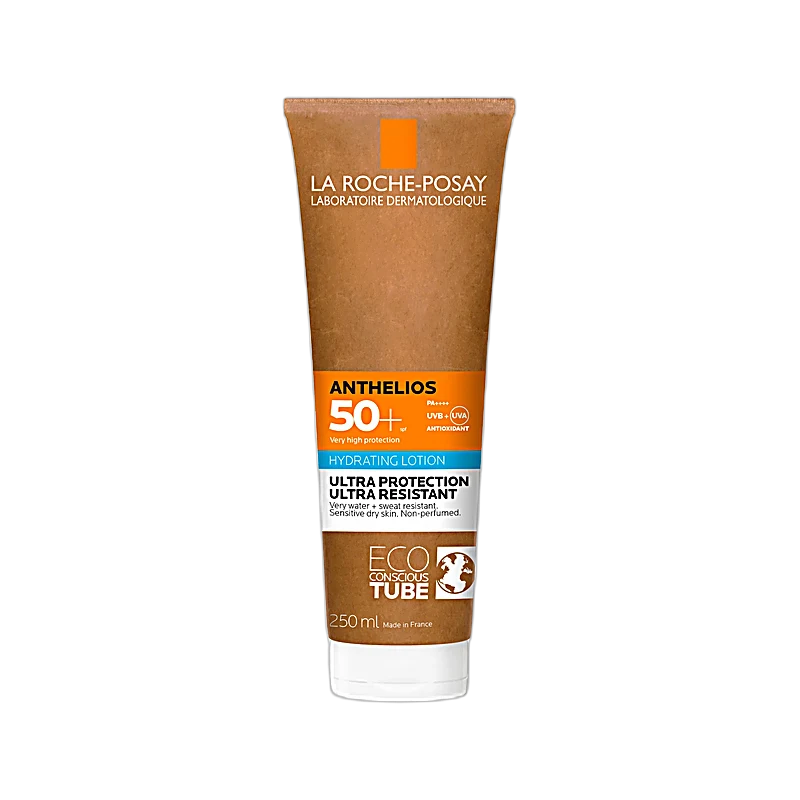
Recommended by DidiLa Roche-Posay Anthelios hydrating sun milk SPF 50+, 250 ml
Didi: A hydrating, very high-factor sun milk that spreads easily over large areas and stands up to water and sweat.
Leads to the product page with an affiliate link: if you buy through it, I earn a commission at no extra cost to you.
Sun lotion
The classic: a balanced oil-in-water emulsion of medium viscosity, thicker than milk, thinner than cream. It is the most widespread form in the world, and the American Academy of Dermatology (AAD) describes it as a common and effective type of sunscreen.
Lotion offers the best ratio of spreadability to staying power on the skin. Its creamy colour gives you visual feedback: you can see where you have applied it and where you have not. The thicker film compared to milk means potentially better real-world protection at the same amount. It suits normal and combination skin and is a universal family choice for face and body.
Watch the quantity: AAD data show that most people apply only 25-50 percent of what is needed. Lotion creates the illusion that it spreads far, and we usually stop before we have applied enough. Face and neck need at least half a teaspoon.
The product from this article
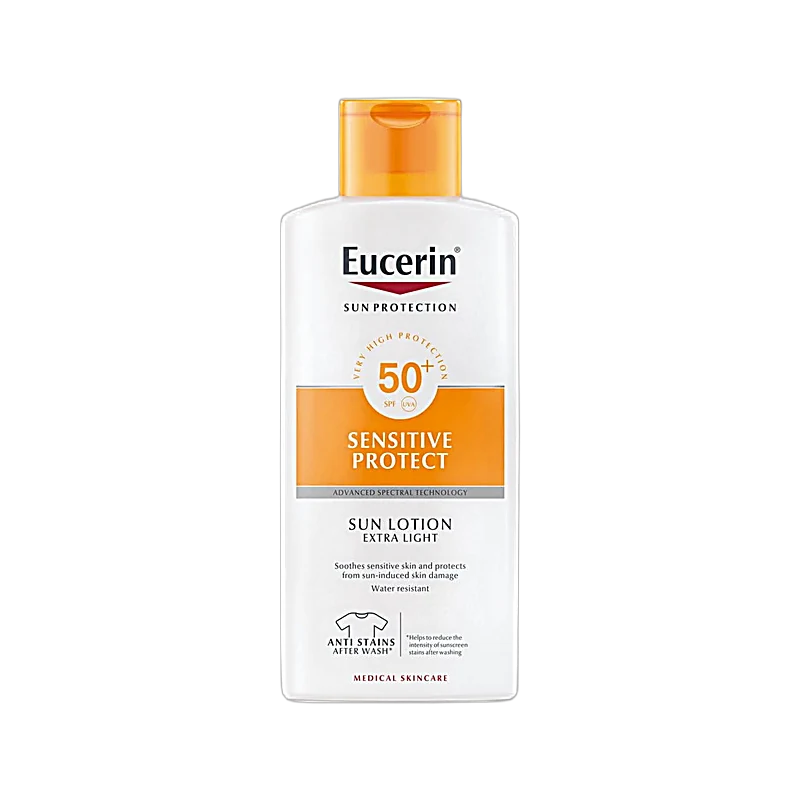
Recommended by DidiEucerin Sun Sensitive Protect body lotion SPF 50+, 400 ml
Didi: A light, fast-absorbing lotion for sensitive skin in a large family-size bottle that lasts the whole summer.
Leads to the product page with an affiliate link: if you buy through it, I earn a commission at no extra cost to you.
Sun cream
The richest and densest texture: a high oil content of 25 to 40 percent, often a water-in-oil emulsion with occlusive emollients such as shea butter, squalane and ceramides. Cream builds the thickest protective film of all textures, and the Sohn et al. study (2014) confirms that formulas with a continuous oil phase achieve the highest in vitro SPF values.
This is the choice for dry and very dry skin, for mature skin with a compromised barrier, for sensitive and atopic skin, and for the mountains and winter sports, where extra protection against wind and cold is needed.
Two frequent mistakes: cream looks like a lot because of its dense texture, so people systematically apply less than needed, and mixing it with foundation or moisturiser for a lighter finish can cut protection by 30-50 percent. A professional tip: warm a small amount between your fingers before applying, it improves spreadability considerably.
The product from this article
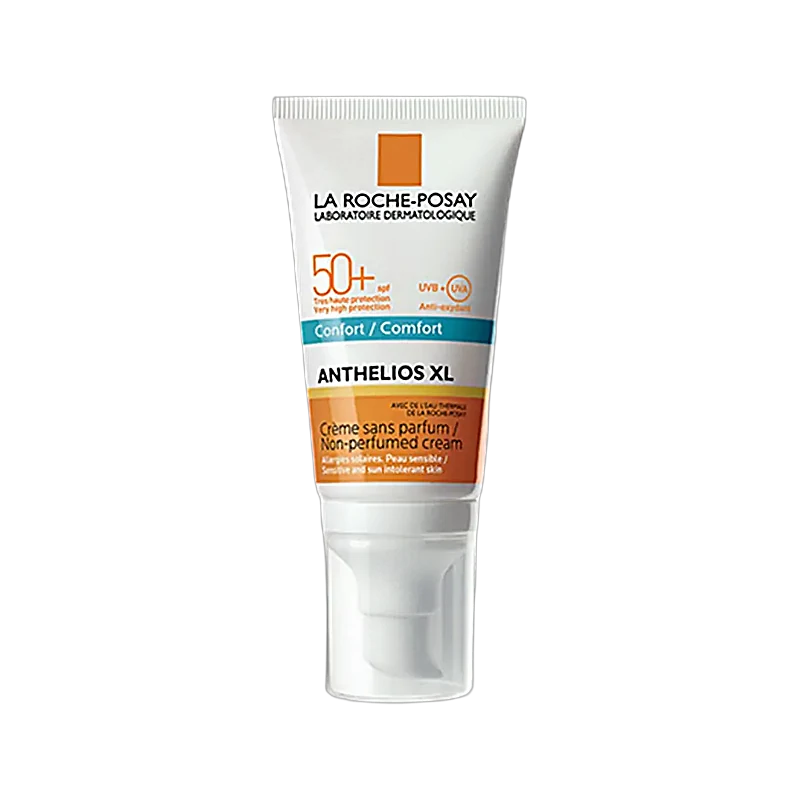
Recommended by DidiLa Roche-Posay Anthelios XL comfort cream SPF 50+, 50 ml
Didi: A rich, fragrance-free cream for sensitive, redness-prone skin that builds an even protective film.
Leads to the product page with an affiliate link: if you buy through it, I earn a commission at no extra cost to you.
Aqua fluid
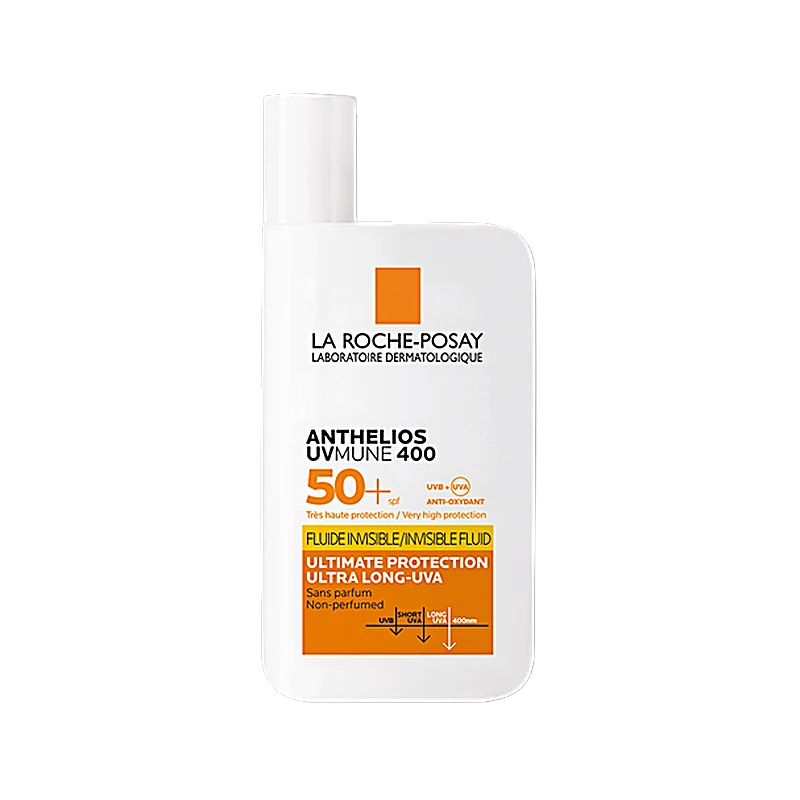
The most technologically advanced form: over 80 percent water and micro-emulsion technology with ultra-small oil droplets. Volatile silicones evaporate after application and leave only the UV filters on the skin. The result is an almost unnoticeable product.
It suits oily and acne-prone skin, works under make-up, copes with hot and humid climates and helps everyone who has avoided sunscreen because of the feel on the skin. If texture has put you off so far, this is your solution.
Aqua fluid, however, builds the thinnest protective film of all liquid forms, and its lightness is deceptive: people apply two to three times less than required. The two-finger rule is mandatory: two full lines of product along the index and middle finger for the face and neck alone. One more practical point: the bottles hold 30-50 ml, not enough for the whole body, so use fluid for the face, neck and décolleté, and choose milk or lotion for the body.
The product from this article
Recommended by DidiLa Roche-Posay Anthelios UVMUNE 400 invisible fluid SPF 50+, 50 ml
Didi: An invisible fluid with very high UVA protection (UVA-PF 46) that sits comfortably on the face and under make-up.
Leads to the product page with an affiliate link: if you buy through it, I earn a commission at no extra cost to you.
Biphasic water
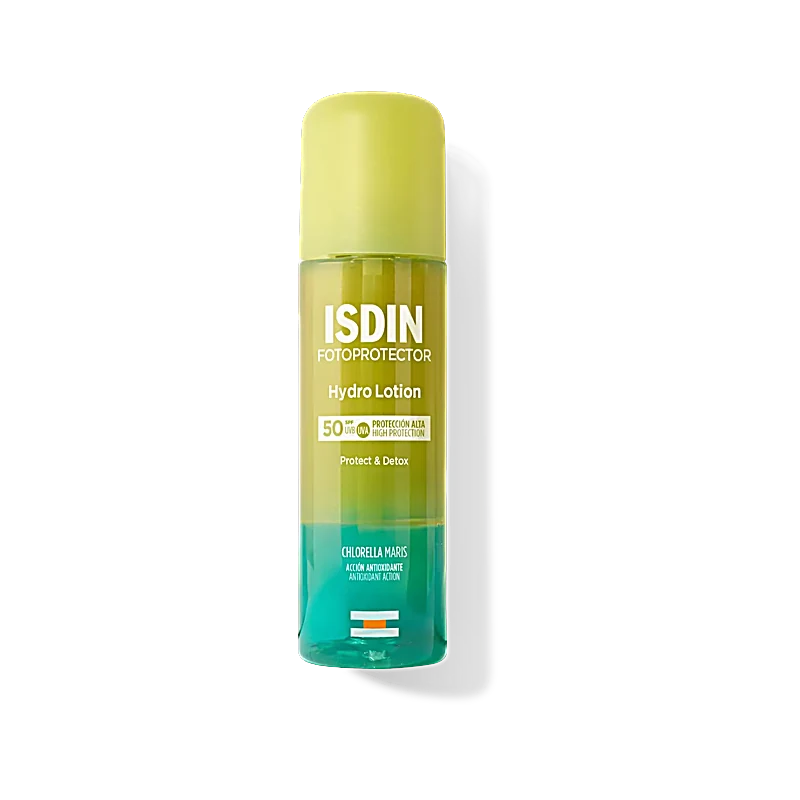
A unique formula without traditional emulsifiers. The bottle shows two separate phases: an upper oil phase with UV filters and antioxidants, and a lower water phase with hydrating ingredients such as hyaluronic acid, glycerin and panthenol. Shaking mixes the phases mechanically for about 30-60 seconds, long enough to apply, before they separate again.
It suits normal to dry and dehydrated skin, allows fast application over large areas of the body, and some formulas can even be applied to wet skin at the beach or pool.
Critical warning: if you do not shake, you get either only the water phase with zero protection, or only the oil phase with uneven coverage. This is the most common mistake and the number one reason these products fail. Shake vigorously for at least 10 seconds until the liquid is fully homogeneous and milky, apply immediately, and if you apply in sections, shake again before each new area.
The product from this article
ISDIN Fotoprotector HydroLotion biphasic body sunscreen SPF 50, 200 ml
Didi: A biphasic formula you shake before use, combining high protection with a light, non-sticky feel on the body.
Leads to the product page with an affiliate link: if you buy through it, I earn a commission at no extra cost to you.
Sunscreen spray
The most controversial form, because here the method of application determines effectiveness more than the formula itself. There are two kinds: aerosol sprays under pressure with a propellant, where only 40-60 percent of the bottle's content is actual product, and pump sprays with mechanical dispensing and no propellant.
Sprays are convenient for hard-to-reach areas like the back, for reapplication during the day and for hairy areas. They are not suitable in wind, around children because of the inhalation risk the AAD warns about, for people with asthma or respiratory problems, or as your first and only protection at the beach.
The figures are telling: research by Griffith University, cited by ARPANSA and the Cancer Council (2021), found that in a 20 km/h wind, a perfectly normal sea breeze, between 28 and 93 percent of the product is lost, and adequate protection in such wind can require up to 250 seconds of spraying per limb. The Cancer Council of Australia officially recommends avoiding aerosol sprays. If you do use a spray: hold it 10-15 cm from the skin, spray until the skin visibly glistens and always spread it with your hand. Never spray directly onto the face, spray into your palm first.
The product from this article
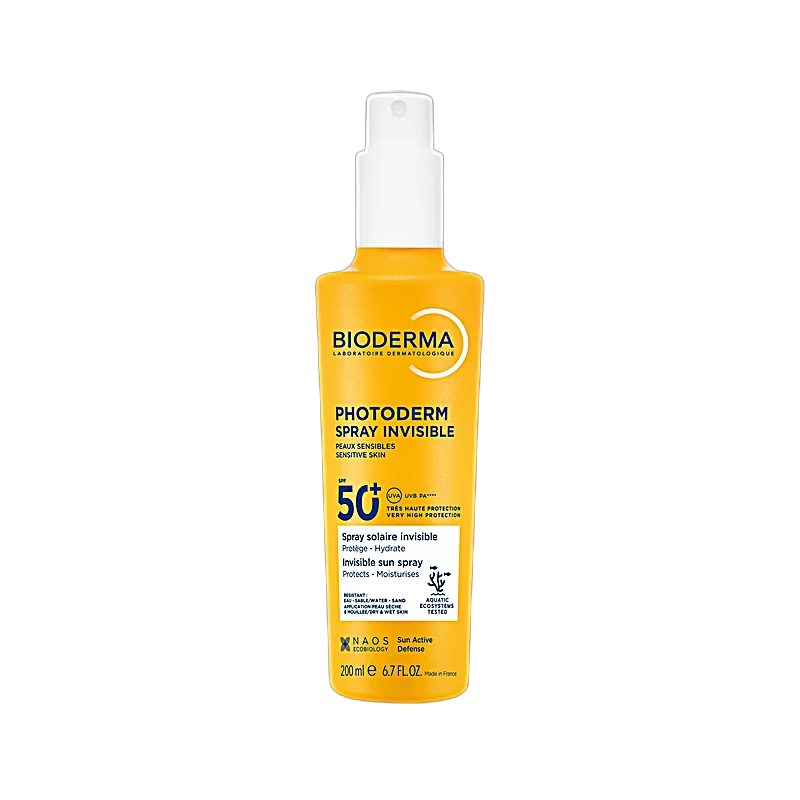
Bioderma Photoderm invisible sunscreen spray SPF 50+, 200 ml
Didi: A transparent spray, handy for quick reapplication during the day, as long as you spread it well with your hand afterwards.
Leads to the product page with an affiliate link: if you buy through it, I earn a commission at no extra cost to you.
Bonus: gel-cream for sun allergy
If every summer brings itchy bumps and redness after sun exposure, this may be a sign of what is called polymorphous light eruption, and the diagnosis is made by a dermatologist. In that case ordinary sunscreen is often not enough, and there are specially developed gel-creams that combine high UVA and UVB protection with soothing ingredients.
The gel-cream texture is light, absorbs quickly and does not clog pores, which makes it suitable for both face and body and for people who dislike heavy products. Apply it generously, in the same amounts as any other sunscreen.
The product from this article
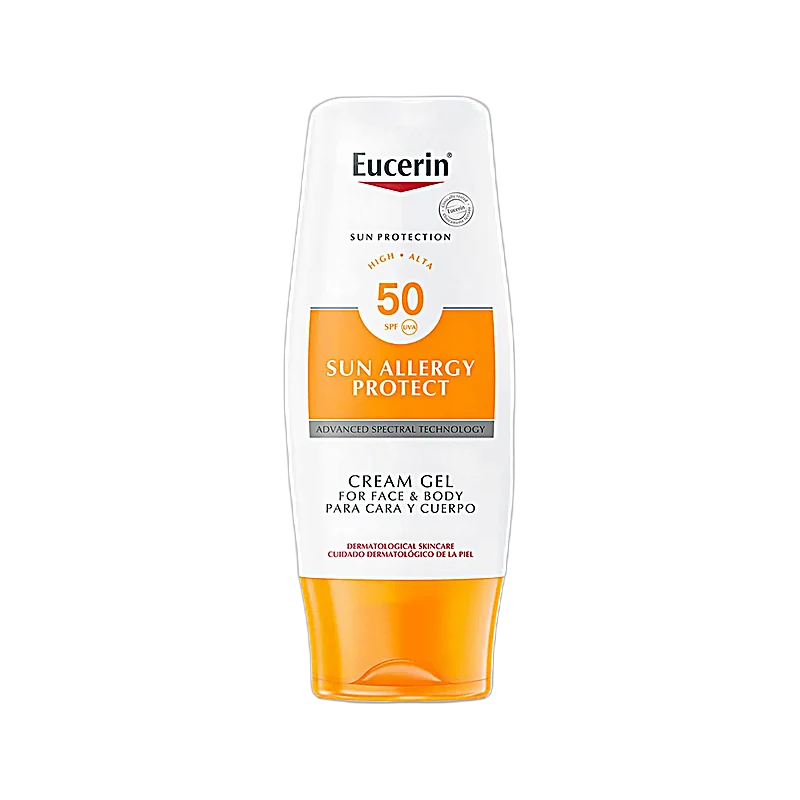
Recommended by DidiEucerin Sun Allergy Protect sun gel-cream SPF 50, 150 ml
Didi: A gel-cream created specifically for skin prone to sun allergy, with high protection and a light texture for face and body.
Leads to the product page with an affiliate link: if you buy through it, I earn a commission at no extra cost to you.
Which texture for whom: a quick guide
Dry and very dry skin: cream first, then lotion, biphasic water and finally milk. Normal skin: lotion, milk, aqua fluid, biphasic water. Combination skin: aqua fluid, milk, lotion. Oily and acne-prone skin: aqua fluid and non-comedogenic milk. Sensitive and atopic skin: cream or lotion with mineral filters.
By situation: for the beach choose milk or lotion for the first application, and spray only for reapplication when there is no wind. For daily facial care: aqua fluid for oily and combination skin, lotion for normal skin, cream for dry skin. For mountains and winter: cream with maximum protection and a barrier against wind. For sport: water-resistant milk for the body and a water-resistant aqua fluid for the face. For children over 6 months: a mineral cream without fragrance.
Which textures are the most reliable
Ranked by reliability of real-world protection, from the safest down: first cream with the thickest, most even film, then lotion with predictable protection and good visual feedback, then milk, which protects well at the right amount, aqua fluid with an excellent formula but an easily underestimated amount, biphasic water, effective only when shaken properly, and finally the aerosol spray, which depends most on the environment and varies the most.
This does not mean the light textures are bad. It only means they demand even more discipline when you apply them.
Three rules no texture can replace
First, quantity. Whatever the texture, the standard is 2 mg per square centimetre of skin: half a teaspoon for face and neck, and about 35 ml, or 6-8 teaspoons, for the whole body. Most people apply only 25-50 percent of that.
Second, the best sunscreen is the one you will actually use, as the AAD puts it. If you cannot stand lotions but like aqua fluid, use aqua fluid. Applying something every day matters more than owning the perfect product that stays in the cupboard.
Third, reapplication matters as much as the first application: every two hours, and always after swimming, towelling off or heavy sweating. Water-resistant means the product survives 40 or 80 minutes in water, not a whole day. If you are unsure which texture suits your skin, ask me in the chat: I answer personally and free of charge, for information purposes only, without diagnosis and without changes to your therapy.
Sources
This article was written by Donka Arabadzhova, Master of Pharmacy, and confirmed by the following sources: Sohn M. et al., „Influence of sunscreen application technique on the sun protection factor“, Journal of Biomedical Optics, 2014. Griffith University, study on the effectiveness of aerosol sunscreen sprays in wind, 2021, cited by ARPANSA and Cancer Council Australia. American Academy of Dermatology (AAD): official recommendations on sunscreen choice, amount and reapplication.
The product from this article
La Roche-Posay Anthelios hydrating sun milk SPF 50+, 250 ml
Recommended by DidiDidi: A hydrating, very high-factor sun milk that spreads easily over large areas and stands up to water and sweat.
Leads to the product page with an affiliate link: if you buy through it, I earn a commission at no extra cost to you.
The product from this article
Eucerin Sun Sensitive Protect body lotion SPF 50+, 400 ml
Recommended by DidiDidi: A light, fast-absorbing lotion for sensitive skin in a large family-size bottle that lasts the whole summer.
Leads to the product page with an affiliate link: if you buy through it, I earn a commission at no extra cost to you.
The product from this article
La Roche-Posay Anthelios XL comfort cream SPF 50+, 50 ml
Recommended by DidiDidi: A rich, fragrance-free cream for sensitive, redness-prone skin that builds an even protective film.
Leads to the product page with an affiliate link: if you buy through it, I earn a commission at no extra cost to you.
The product from this article
La Roche-Posay Anthelios UVMUNE 400 invisible fluid SPF 50+, 50 ml
Recommended by DidiDidi: An invisible fluid with very high UVA protection (UVA-PF 46) that sits comfortably on the face and under make-up.
Leads to the product page with an affiliate link: if you buy through it, I earn a commission at no extra cost to you.
The product from this article
ISDIN Fotoprotector HydroLotion biphasic body sunscreen SPF 50, 200 ml
Didi: A biphasic formula you shake before use, combining high protection with a light, non-sticky feel on the body.
Leads to the product page with an affiliate link: if you buy through it, I earn a commission at no extra cost to you.
The product from this article
Bioderma Photoderm invisible sunscreen spray SPF 50+, 200 ml
Didi: A transparent spray, handy for quick reapplication during the day, as long as you spread it well with your hand afterwards.
Leads to the product page with an affiliate link: if you buy through it, I earn a commission at no extra cost to you.
The product from this article
Eucerin Sun Allergy Protect sun gel-cream SPF 50, 150 ml
Recommended by DidiDidi: A gel-cream created specifically for skin prone to sun allergy, with high protection and a light texture for face and body.
Leads to the product page with an affiliate link: if you buy through it, I earn a commission at no extra cost to you.
This article is for informational purposes only and does not replace a consultation with a doctor or pharmacist about your specific condition. The product cards in it lead to pages with affiliate links: if you buy through them, I earn a small commission at no extra cost to you.
I answer personally and free of charge, for information purposes only, without diagnosis and without changes to your therapy.
If this article was useful and you think it will help someone, share it. That is how my work and knowledge reach more people.