
 Mother and childSeptember 2, 2026· Updated on September 3, 20268 min read
Head lice and nits in children: what actually works
Author: Donka Arabadzhova, Master of Pharmacy
This article is for informational purposes only and does not replace a consultation with a doctor or pharmacist about your specific condition.
How I choose topics and verify facts, read in the Editorial policy of mom.pharma.
Finding this article useful? Share it: that is how my work and knowledge reach more people.
First: no panic, no shame
Head lice are the most frequent reason a parent walks into the pharmacy with a sinking heart in September. In the very first days of September, a slightly worried mother walked into the pharmacy and showed me a photo on her phone with the words 'Is this a nit?' On the screen I saw ordinary dandruff, while two jars of a homemade internet recipe were already waiting in her bag. We set the jars aside and I explained how to do the check I describe below.
Head lice are not a sign of poor hygiene and they do not transmit disease, as confirmed by the US Centers for Disease Control and Prevention. Any child who presses their head against another child's head while playing can catch them, and the parasite actually moves more easily through clean hair. All that is needed is a precise reaction in the first days, not drastic measures.
How to recognise an infestation
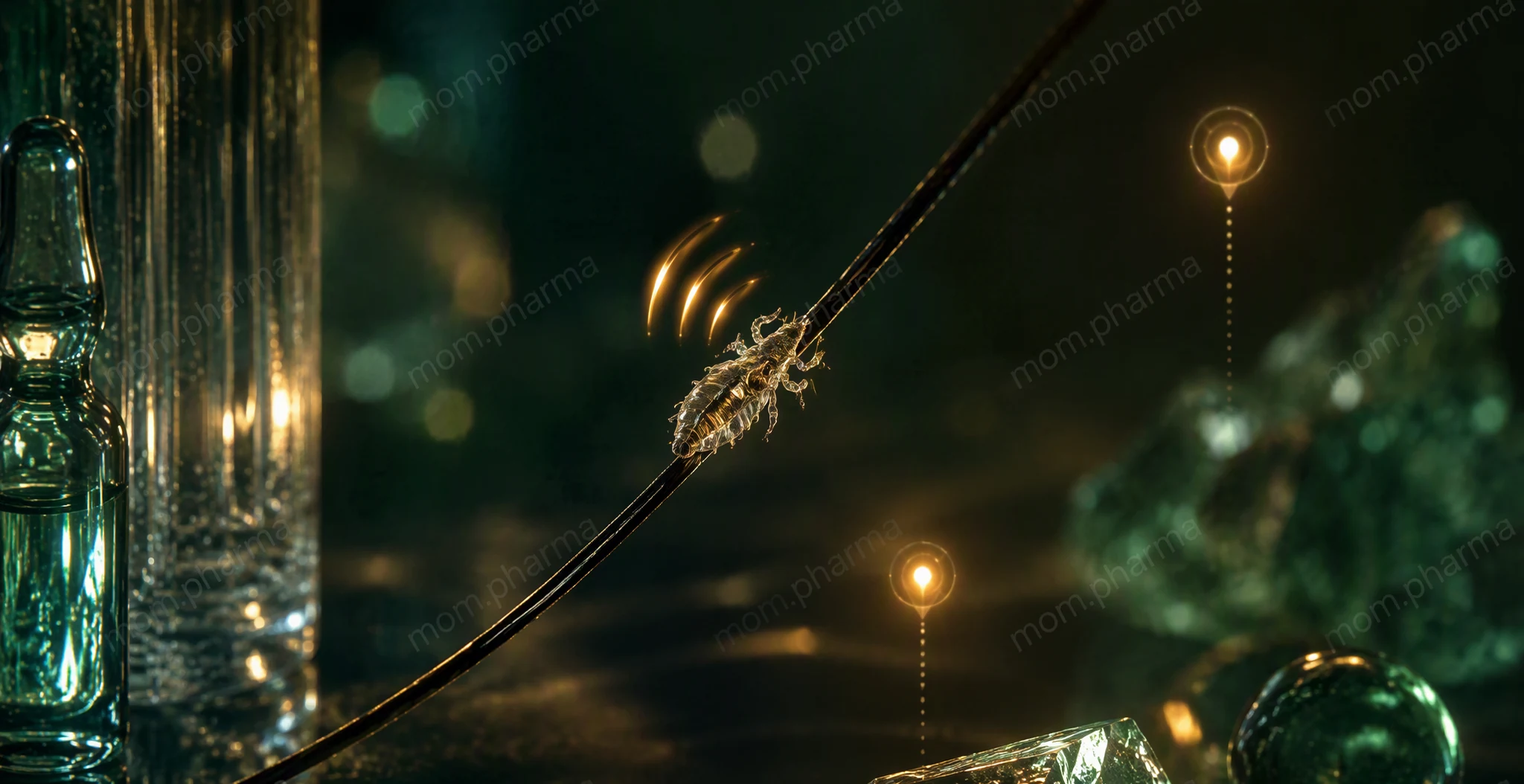
The classic signal is itching of the scalp, especially behind the ears and on the nape. It is an allergic reaction to the louse's saliva, and on first contact with the parasite it may appear only after 4 to 6 weeks, so the absence of itching does not rule out the possibility that the child has lice.
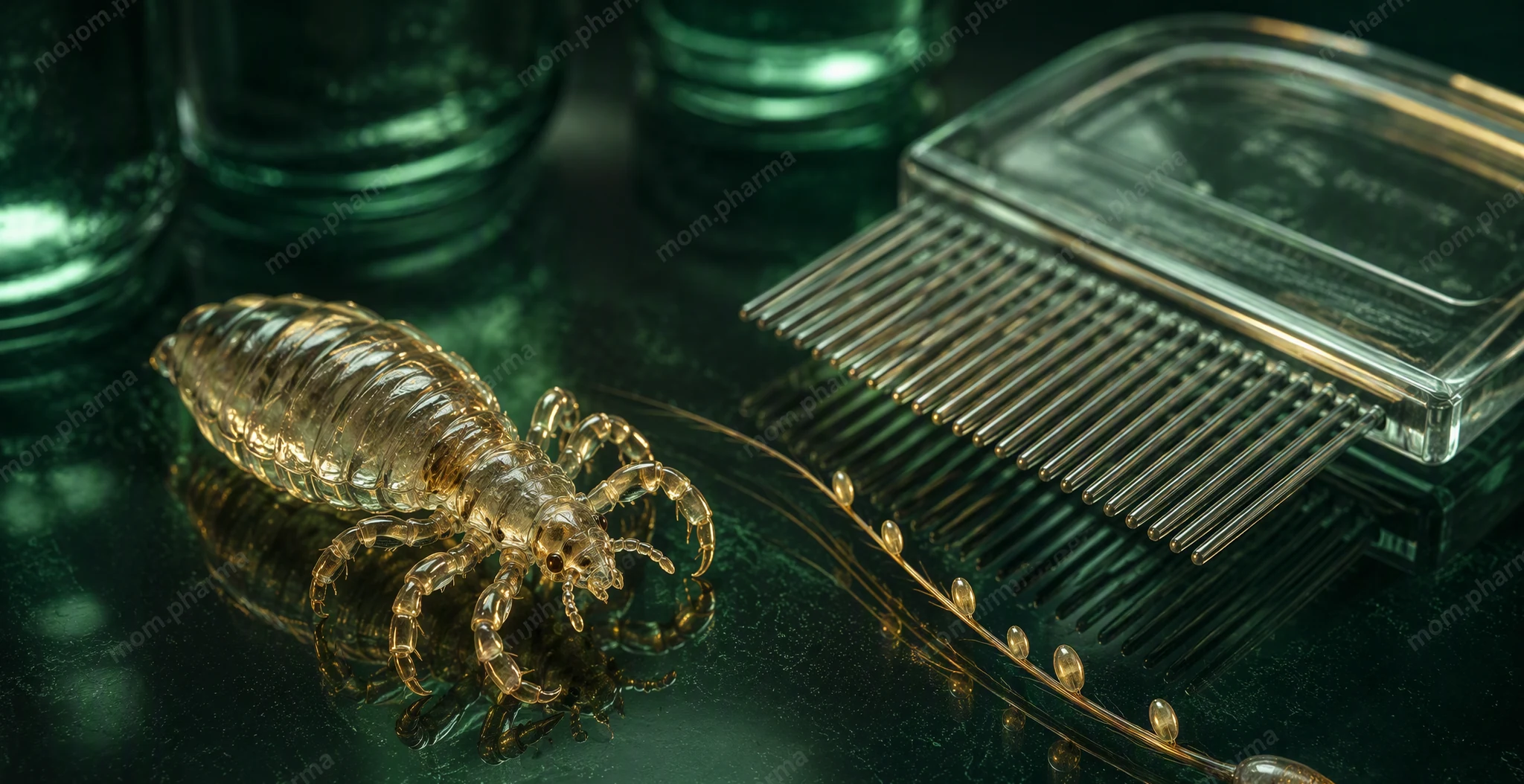
Other signs are a tickling feeling or a sensation of movement in the hair, restless sleep because lice are more active in the dark, and scratch sores that sometimes become infected. The louse is semi-transparent, greyish-white or yellowish-white when hungry. Right after feeding it turns reddish-brown to dark brown because the abdomen is full of blood, and it becomes almost black as the blood inside starts to be digested and to clot. The louse is an insect the size of a sesame seed, 2 to 3 mm, it moves fast and avoids light.
The check that never lies
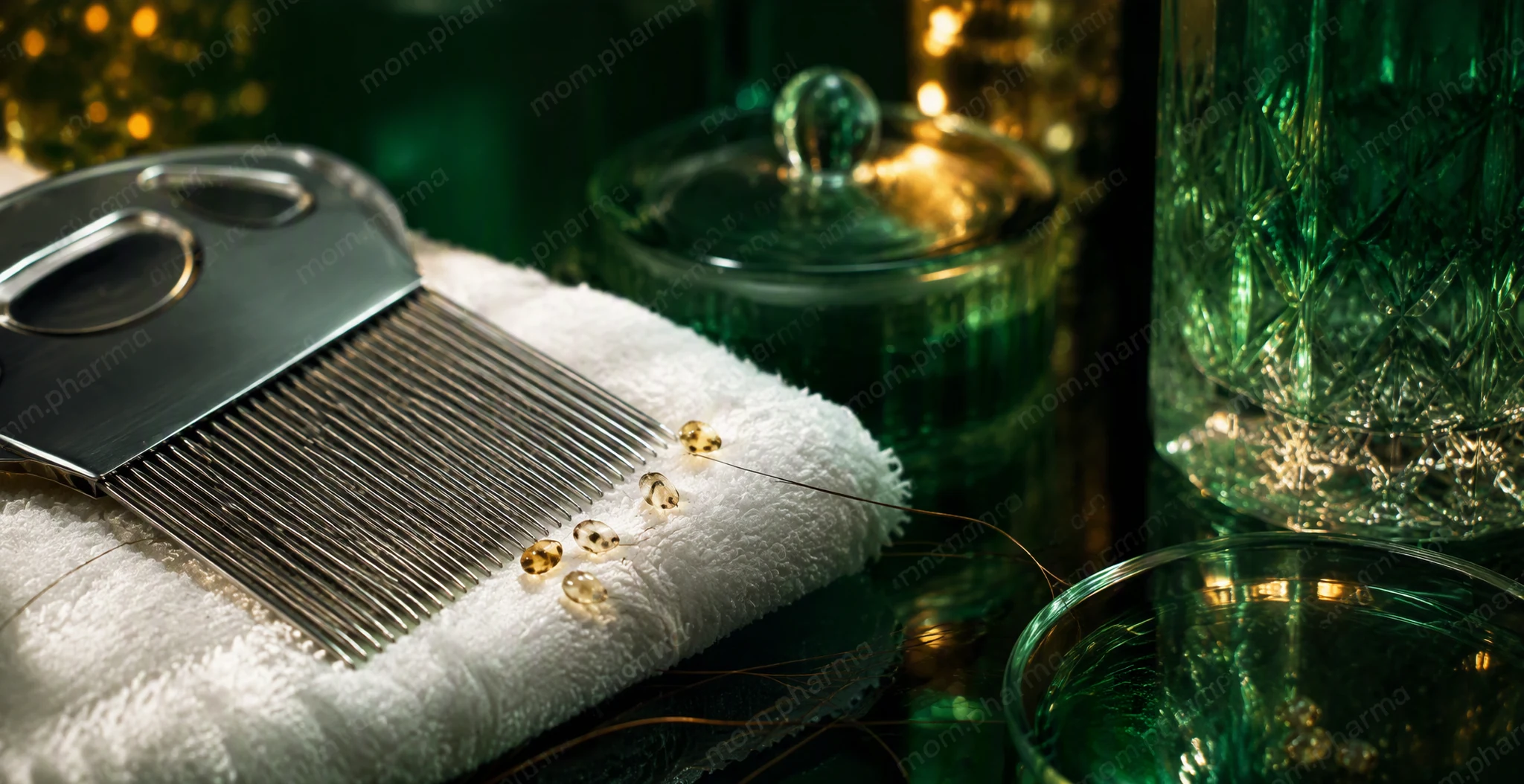
Wet combing is the method I trust at home: the hair is wetted and a generous amount of ordinary hair conditioner is applied, which immobilises the lice, then you go through it with a fine-toothed comb, roughly with a spacing below 0.3 mm. Comb strand by strand, from root to tip, under strong light, and wipe the comb on a white towel after each stroke. The mandatory zones are behind the ears, the nape and the crown.
Viable nits sit glued less than half a centimetre from the scalp, because the egg needs the warmth of the head to develop. Anything further along the length of the hair shaft is usually an empty shell from a nit that has already hatched. Dandruff is easy to tell apart: it falls off when the hair is shaken, while a nit is glued firmly and only slides along the shaft.
If after a full check you find neither a live louse nor nits close to the scalp, there is no infestation and no application should be done. A large share of the 'lice' shown to me at the counter turn out to be simply dandruff.
The life cycle: why the second application is never wasted
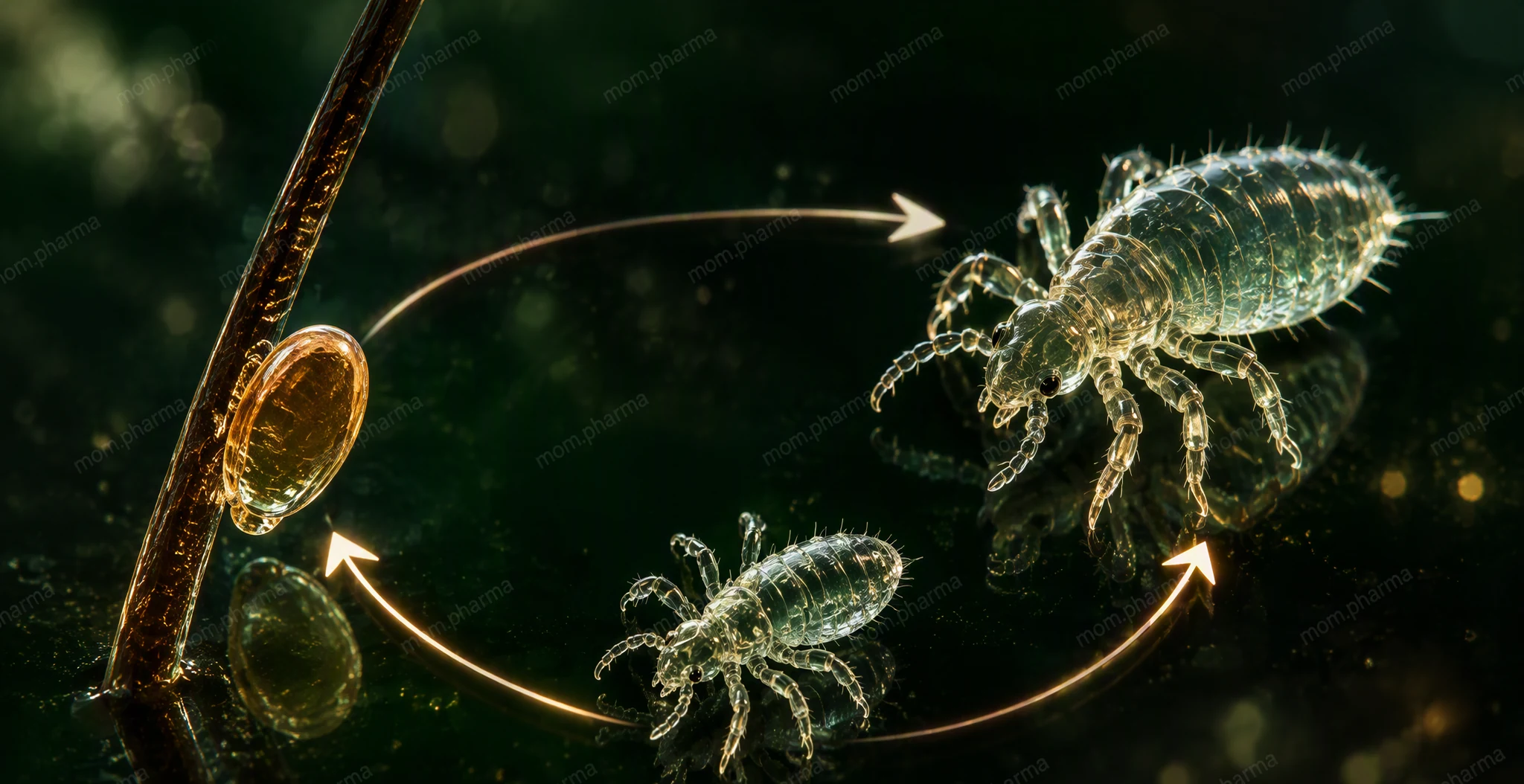
The female lays about 6 eggs a day and fixes them to the hair with something like waterproof glue. The nit hatches in 6 to 9 days, the young louse matures in about a week and starts laying its own eggs, and the adult lives on the head for up to about 30 days.
Almost all products act more weakly on eggs than on the insects, so the schedule requires a second application on day 7 to 9: this catches the newly hatched lice before they become sexually mature. Miss the repeat application and in about ten days you will start the battle from the beginning.
The pharmacy products that work

The standard choice in Bulgarian pharmacies today are products with dimeticone. Their action is purely physical: the silicone oil coats the insect, closes its breathing openings and disrupts the water balance of its body. Lice do not develop resistance to such a mechanism, unlike classic insecticides.
In randomised studies, two correctly done applications of a dimeticone lotion clear the infestation in 70 to 90% of children, and the result depends on following the schedule exactly and on checking the whole family. These products are medical devices: read the instructions for use and respect the age limit on the label.
Permethrin is a classic insecticide, but in many countries lice are now partially resistant to it and results are unpredictable. Which product suits your child's age and how much is needed for long, thick hair is something to clarify with the pharmacist: too little product is a frequent mistake I encounter in my practice.
Application step by step

Apply the product exactly as its package instructions say: the amount, the contact time and the rinsing differ between brands. Application is done over a sink, not in the shower, to limit contact with the skin of the body, and the eyes are protected so none of the product gets into them. Do not combine two products at the same time and do not extend the contact time by your own judgement: more does not mean a better result.
The second application is done on day 7 to 9 according to the instructions in the leaflet. Between the two applications the hair is combed with the nit comb every 2 to 3 days, and control checks continue for a total of 2 to 3 weeks, to be sure nothing has hatched after the last application.
Only people with live lice or nits get treated, but everyone at home is checked on one and the same day. Notify close relatives or friends who have visited recently too. If two family members are affected, the procedure is done simultaneously, otherwise the parasite simply changes host.
The home: what is needed and what is pointless

Bed linen, towels, hats and clothes from the last two days are washed at 60 degrees. Combs and hair ties are soaked for 5 to 10 minutes in water above 50 degrees. Pillows, plush toys and other items that cannot be washed go into a tightly tied bag for two weeks: away from the head the louse dies within 1 to 2 days, and nits do not hatch without the warmth of the scalp.
Vacuum the floor and the sofas and that is fully sufficient. Insecticide sprays for furniture and rooms are not used: the parasite does not survive in those places, while the chemical remains on the surfaces children play on. The car is not sprayed either, it is enough to vacuum the seats.
The methods that do not work, and the ones that are dangerous

The combination of petrol, petroleum jelly and vinegar, widespread in Bulgaria, carries serious and medically documented health risks. The risks are: 1. Chemical burns and dermatitis, because petrol is an extremely aggressive petroleum product. Time spent on delicate children's skin, often under a plastic cap that intensifies the effect, leads to severe chemical burns, redness, blisters and contact dermatitis. 2. Toxicity when inhaled: petrol vapours are highly toxic. Breathing them in for a long time in a closed bathroom can cause dizziness, headache, nausea and even toxic alveolitis with lung damage. 3. Risk of serious poisoning: children's skin is thin and highly permeable. Petroleum derivatives can be absorbed through the scalp directly into the bloodstream, burdening the liver and kidneys.
Essential oils such as tea tree oil lack sufficient studies in children and regularly cause contact dermatitis on an already scratched scalp. 'Natural' in this case does not mean safe.
Strictly forbidden are petrol, kerosene and any products for room pest control or for animals: besides being toxic to a child's organism, they are flammable and every year there are burns from such attempts. No 'grandma's method' justifies this risk.
School, kindergarten and shame
After you have done the first application the child can return to kindergarten or school; the practice in Bulgarian schools and kindergartens is to require that dealing with the problem has begun, not a fully solved problem. Inform the class teacher or the medical person discreetly: checking the other children is the only thing that truly protects your child from a new encounter with the parasite two weeks later.
Spreading happens during head-to-head play, swapping hats or selfies with touching heads, not from 'dirty hair'. A weekly comb check through September and October takes ten minutes on a Sunday evening and saves weeks of struggle.
When a doctor is needed

For a child under 2 years the choice of product is limited and is made with the paediatrician. The same applies to pregnant and breastfeeding women, as well as to children with atopic dermatitis or open scratch sores on the scalp.
A doctor is also needed for purulent sores or swollen lymph nodes, because scratching opens the door to bacterial infection, for lice on the eyelashes and eyebrows, and when two correctly done applications give no result: then a prescription alternative is discussed.
If you are not sure whether what you see in the hair is a nit, or you hesitate which product suits your child's age, write to me in the Ask Didi chat: I answer personally and free of charge, for information purposes, without diagnosis and without changing therapy.
Sources
This article was written by Donka Arabadzhova, Master of Pharmacy, and confirmed by the following sources: CDC: life cycle, symptoms and spread of head lice; CDC: treating the home and close contacts; NHS: wet combing and steps for head lice and nits; DermNet: clinical features and reasons for treatment failure in pediculosis; Burgess et al., BMC Public Health 2009: randomised trial of dimeticone 4% lotion; Heukelbach et al., BMC Infectious Diseases 2008: dimeticone versus permethrin for head lice.
This article is for informational purposes only and does not replace a consultation with a doctor or pharmacist about your specific condition.
I answer personally and free of charge, for information purposes only, without diagnosis and without changes to your therapy.
If this article was useful and you think it will help someone, share it. That is how my work and knowledge reach more people.