
 Dermocosmetics and skin careAugust 22, 2026· Updated on September 1, 20266 min read
Hyaluronic acid: what it really does in cosmetics and why a cream is not a filler
Author: Donka Arabadzhova, Master of Pharmacy
This article is for informational purposes only and does not replace a consultation with a doctor or pharmacist about your specific condition.
The product cards in it lead to pages with affiliate links: if you buy through them, I earn a small commission at no extra cost to you.
How I choose topics and verify facts, read in the Editorial policy of mom.pharma.
Finding this article useful? Share it: that is how my work and knowledge reach more people.
Two questions I hear every day
The first: "Which cream works like a filler?" The second: "Do you have a hyaluronic acid to drink, to hydrate the skin from within?" The answer to both starts with no. Hyaluronic acid is a valuable ingredient, but in cosmetics it does one thing: it hydrates the surface and temporarily smooths. Everything beyond that is a promise. So here I explain what it actually does, which formulas make sense and where cosmetics ends.
What it is and how it works in the skin

Hyaluronic acid is a natural molecule of the intercellular substance in the skin. It binds water and helps the skin retain moisture, and with age its amount decreases while ultraviolet rays accelerate its breakdown (Papakonstantinou and colleagues, 2012). Its half-life in the epidermis is on the order of two to three hours, and about a day in the dermis. Daily use is not a marketing trick but physiology: the skin does not store hyaluronic acid from last month.
As a humectant it is a substance that attracts and holds moisture from the deeper layers of the skin. In cosmetics concentrations are usually 0.1 to 2%, and what decides is the molecular weight and the combination of forms. High-molecular hyaluronic acid builds a hydrating film on the surface, low-molecular penetrates deeper into the epidermis. Low molecular weight by itself is not better: it is a weaker surface moisturiser. Quality formulas therefore combine several molecular weights instead of relying on one.
What the studies show and where cosmetics ends
The 2022 review by Bravo and colleagues in Dermatologic Therapy summarises: topical hyaluronic acid is well tolerated and works for hydration and skin quality, reducing the look of fine wrinkles and improving elasticity. A study cited in the same review found a prolonged effect of botulinum toxin when a hyaluronic acid serum was added. I owe you a caveat rarely heard: part of the data comes from studies linked to the cosmetics industry, including in this review. The European criteria for cosmetic claims, Regulation (EU) No 655/2013, require every claim to be supported and honest.
And the thing I repeat to every customer: whatever the label promises, the cream is not a filler. Dermal fillers are class III medical devices under Regulation (EU) 2017/745, contain cross-linked hyaluronic acid and are placed by a doctor. Cosmetics works in the stratum corneum and the epidermis: surface hydration and temporary smoothing, but not volume. A filler in a tube does not exist.
How to apply it: the basic rules

Rule one: the serum goes onto slightly damp skin, and on top a cream with occlusive ingredients such as oils, ceramides or squalane. That way the water stays inside.
Rule two: look for a combination of molecular weights. When a product advertises several forms of hyaluronic acid, that is no accident: the high-molecular one hydrates from above, the low-molecular one works deeper in the epidermis, and that is why companies combine them in one product.
Rule three: do not be led by the percentage on the box. Above about 2% the extra amount brings little, because the formula, the molecular weight and the accompanying ingredients decide. A higher percentage does not mean a better effect.
And rule four, which I always remind: anti-ageing care without sun protection is work done halfway. Daily SPF is part of the routine. Which care at which age and how a sunscreen texture is chosen, I tell in the article about anti-ageing care through the years and in the article about sunscreen textures.
The products I show in the pharmacy
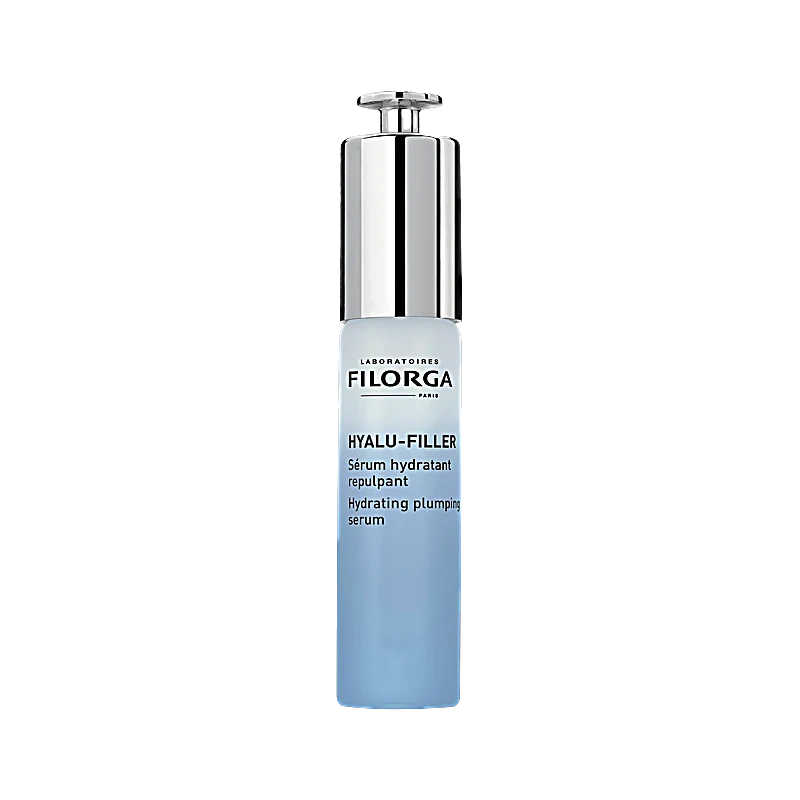
Filorga Hyalu-Filler contains five types of hyaluronic acid of different molecular weights, from high-molecular to micro-fragmented. With regular use it hydrates and smooths the look of fine wrinkles, the effect remaining superficial and temporary.
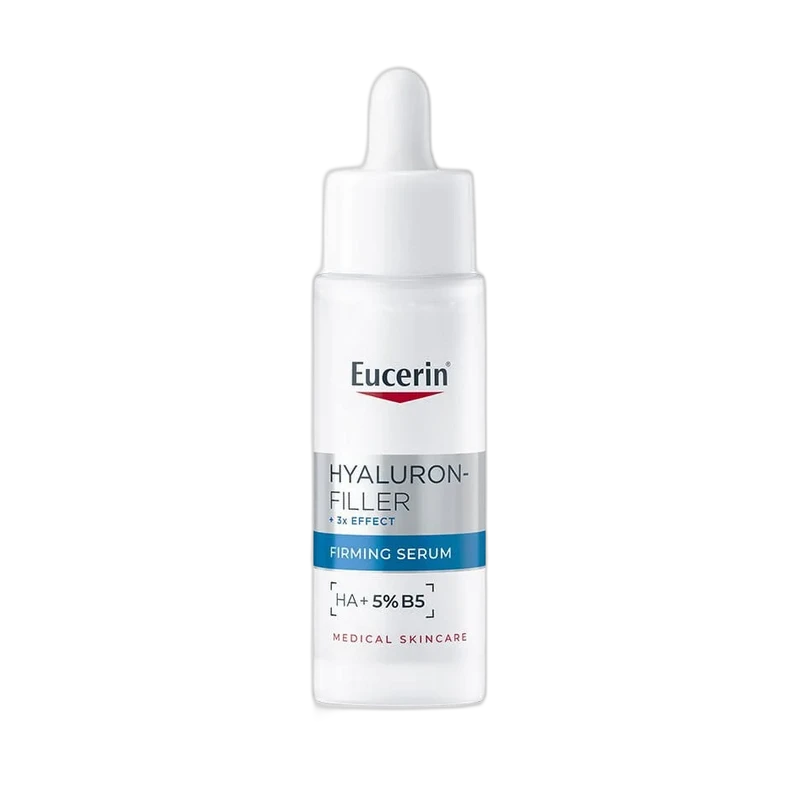
Eucerin Hyaluron-Filler + 3x Effect works in three steps: high- and low-molecular hyaluronic acid for filling the look of wrinkles, soy extract, which according to the manufacturer stimulates hyaluronic acid synthesis in skin cells by up to 256% in a laboratory study, and enoxolone, which slows the breakdown of the skin's own hyaluronic acid. The series also has a day cream for dry skin with SPF 15.
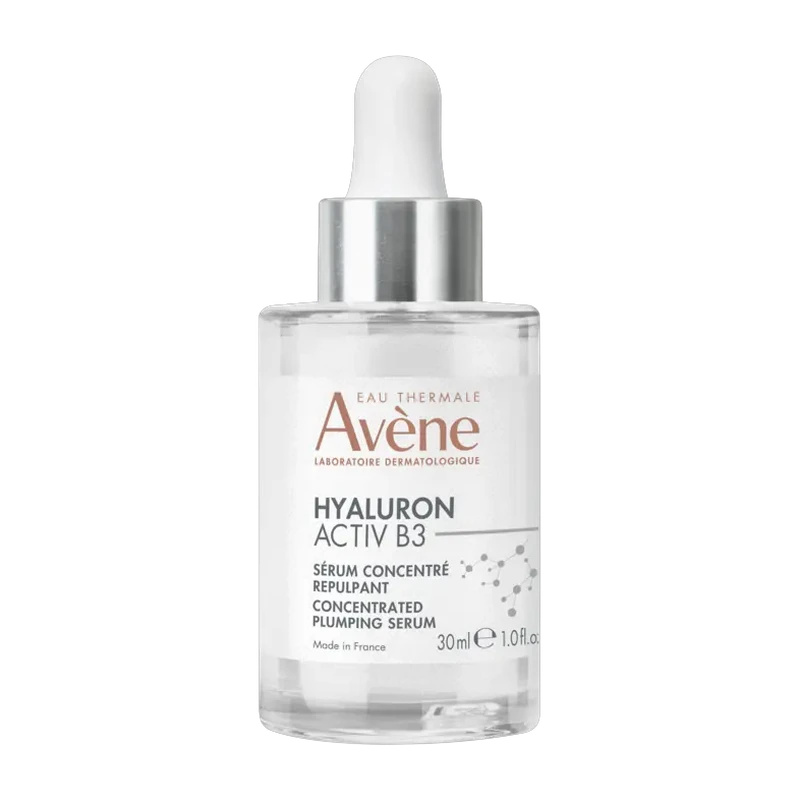
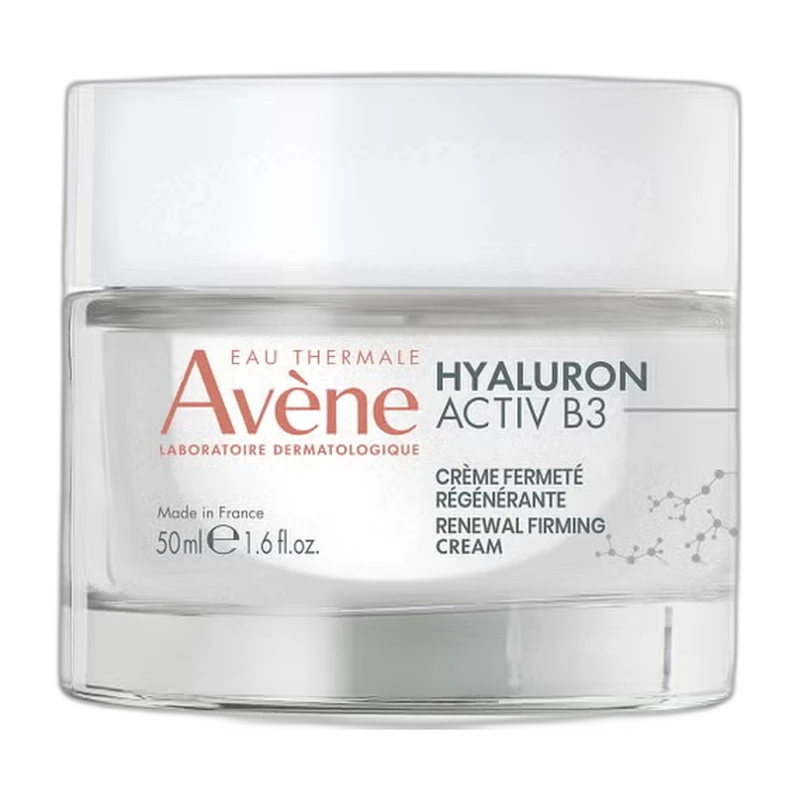
Avène relies on the Hyaluron Activ B3 duo: a concentrated serum and a cream with hyaluronic acid and niacinamide. The serum is the active step morning and evening, and the cream seals the moisture on top. The data on smoothing the look of wrinkles come from the manufacturer's own tests, and I read them as I read every company study: with reservation.
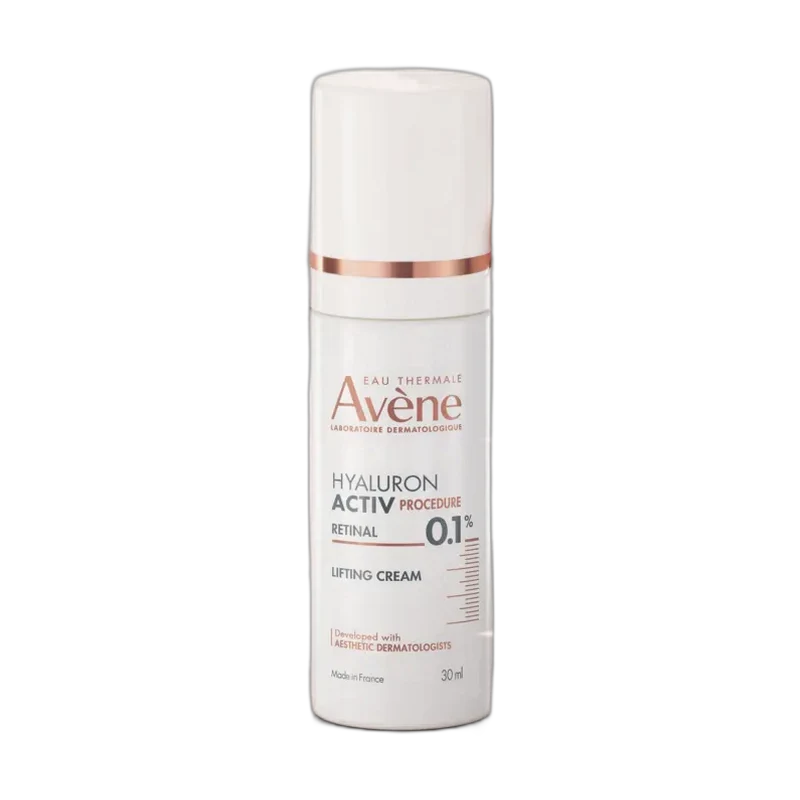
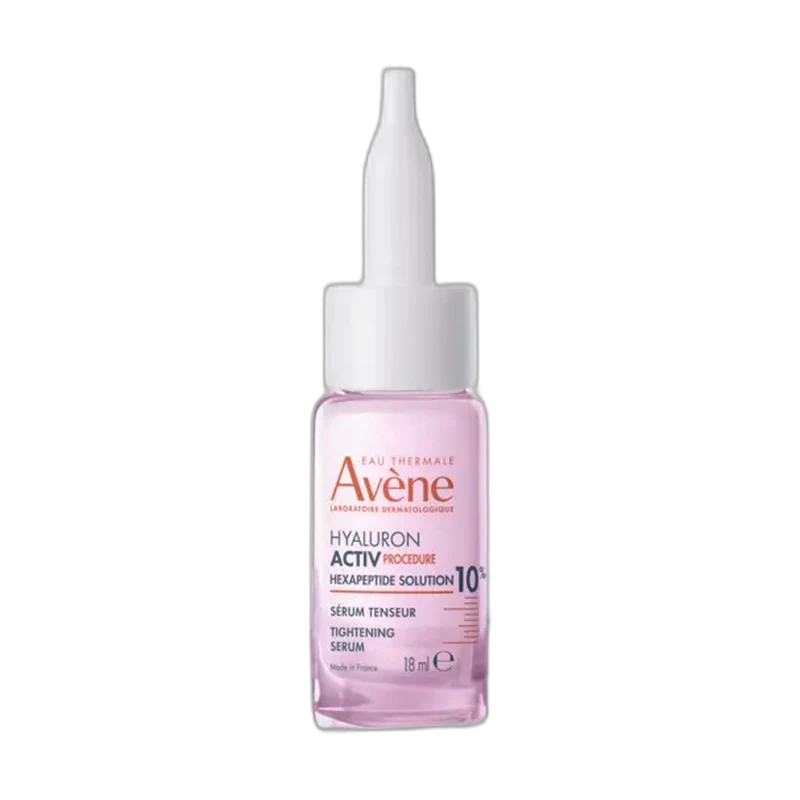
The same brand also has a stronger line: Hyaluron Activ Procedure. The cream combines 0.1% retinal with hyaluronic acid and 2% niacinamide for deeper wrinkles, and the serum contains 10% hexapeptide for expression lines. Both contain hyaluronic acid as part of the formula, but their main strength comes from the retinal and the peptide, so the retinal cream stays for the evening, with sunscreen the next morning, and like every retinal product it is not for pregnancy.
The product from this article
Recommended by DidiFilorga Hyalu-Filler hydrating plumping serum, 30 ml
Didi: A serum with several forms of hyaluronic acid for visibly plumper, smoother skin with regular use.
Leads to the product page with an affiliate link: if you buy through it, I earn a commission at no extra cost to you.
The product from this article
Recommended by DidiEucerin Hyaluron-Filler + 3x Effect plumping anti-wrinkle serum, 30 ml
Didi: A concentrated serum with hyaluronic acid and 5% panthenol that firms and plumps. Pairs well with the day cream from the same line.
Leads to the product page with an affiliate link: if you buy through it, I earn a commission at no extra cost to you.
The product from this article
Recommended by DidiAvène Hyaluron Activ B3 concentrated anti-wrinkle serum, 30 ml
Didi: A concentrated serum with hyaluronic acid and niacinamide; apply on slightly damp skin and always seal with a cream on top.
Leads to the product page with an affiliate link: if you buy through it, I earn a commission at no extra cost to you.
The product from this article
Recommended by DidiAvène Hyaluron Activ B3 cell renewal cream, 50 ml
Didi: A cream with hyaluronic acid and niacinamide for visibly smoother, hydrated skin; apply morning and evening after the serum from the same line.
Leads to the product page with an affiliate link: if you buy through it, I earn a commission at no extra cost to you.
The product from this article
Avene Hyaluron Activ Procedure lifting anti-wrinkle cream with 0.1% retinal, 30 ml
Didi: A cream with 0.1% retinal and hyaluronic acid for visible wrinkles and loss of firmness. Retinal is not used during pregnancy.
Leads to the product page with an affiliate link: if you buy through it, I earn a commission at no extra cost to you.
The product from this article
Avene Hyaluron Activ Procedure tightening serum with 10% hexapeptide, 18 + 2 ml
Didi: A fourteen-day ampoule course with 10% hexapeptide for expression lines. Before the first use the two phases are mixed, as described on the packaging.
Leads to the product page with an affiliate link: if you buy through it, I earn a commission at no extra cost to you.
Myths circulating on social media
"Drinking hyaluronic acid will hydrate the skin from within." In the EU register there is no approved health claim for oral hyaluronic acid, neither for skin nor for joints. A large part of what is drunk gets broken down, and the evidence for a skin effect is weak. Drinking is not equal to topical care, and to a filler it is not equal at all.
"A hyaluronic cream dries the skin in winter." A myth circulating for years. The drying comes from the missing occlusive step on top, not from the ingredient itself. Damp skin, serum, a cream with ceramides or oils, and the question disappears.
"The higher the percentage, the better." No: the molecular weight, the combination and the formula decide, and above about 2% adding more brings little.
"Hyaluronic acid causes acne or allergies." It is a physiological molecule with minimal comedogenicity. Reactions usually come from another ingredient, most often a preservative or a perfume.
When to seek a doctor
If you have had a filler placed and the area shows severe swelling, paleness, strong pain or fever, seek a doctor immediately: that can be a vascular complication. If after a new cream the skin turns red, burns or itches, stop it and ask a pharmacist: the cause is probably another ingredient. Lasting spots and moles that bleed or change their look are not fixed with a cream but are for a dermatologist. And if you want a filler effect, be honest with yourself: that is a procedure performed by a doctor, not a pharmacy product.
During pregnancy and breastfeeding fillers are not recommended without medical judgement, while topical cosmetics with hyaluronic acid has no known risk, although every new cosmetic product is best agreed with a pharmacist. If you hesitate which serum is for your skin, ask me in the chat: I answer personally and free of charge, for information only, without diagnosis and without changing therapy.
Sources
This article was written by Donka Arabadzhova, Master of Pharmacy, and confirmed by the following sources: Papakonstantinou E. et al., "Hyaluronic acid: A key molecule in skin aging", Dermatoendocrinol, 2012; Bravo B. et al., "Benefits of topical hyaluronic acid for skin quality and signs of skin aging", Dermatologic Therapy, 2022; Regulation (EU) No 655/2013, common criteria for cosmetic claims; Regulation (EU) 2017/745 on medical devices, Annex XVI (dermal fillers, class III); product documentation from Filorga, Eucerin and Avène official pages.
The product from this article
Filorga Hyalu-Filler hydrating plumping serum, 30 ml
Recommended by DidiDidi: A serum with several forms of hyaluronic acid for visibly plumper, smoother skin with regular use.
Leads to the product page with an affiliate link: if you buy through it, I earn a commission at no extra cost to you.
The product from this article
Eucerin Hyaluron-Filler + 3x Effect plumping anti-wrinkle serum, 30 ml
Recommended by DidiDidi: A concentrated serum with hyaluronic acid and 5% panthenol that firms and plumps. Pairs well with the day cream from the same line.
Leads to the product page with an affiliate link: if you buy through it, I earn a commission at no extra cost to you.
The product from this article
Avène Hyaluron Activ B3 concentrated anti-wrinkle serum, 30 ml
Recommended by DidiDidi: A concentrated serum with hyaluronic acid and niacinamide; apply on slightly damp skin and always seal with a cream on top.
Leads to the product page with an affiliate link: if you buy through it, I earn a commission at no extra cost to you.
The product from this article
Avène Hyaluron Activ B3 cell renewal cream, 50 ml
Recommended by DidiDidi: A cream with hyaluronic acid and niacinamide for visibly smoother, hydrated skin; apply morning and evening after the serum from the same line.
Leads to the product page with an affiliate link: if you buy through it, I earn a commission at no extra cost to you.
The product from this article
Avene Hyaluron Activ Procedure lifting anti-wrinkle cream with 0.1% retinal, 30 ml
Didi: A cream with 0.1% retinal and hyaluronic acid for visible wrinkles and loss of firmness. Retinal is not used during pregnancy.
Leads to the product page with an affiliate link: if you buy through it, I earn a commission at no extra cost to you.
The product from this article
Avene Hyaluron Activ Procedure tightening serum with 10% hexapeptide, 18 + 2 ml
Didi: A fourteen-day ampoule course with 10% hexapeptide for expression lines. Before the first use the two phases are mixed, as described on the packaging.
Leads to the product page with an affiliate link: if you buy through it, I earn a commission at no extra cost to you.
This article is for informational purposes only and does not replace a consultation with a doctor or pharmacist about your specific condition. The product cards in it lead to pages with affiliate links: if you buy through them, I earn a small commission at no extra cost to you.
I answer personally and free of charge, for information purposes only, without diagnosis and without changes to your therapy.
If this article was useful and you think it will help someone, share it. That is how my work and knowledge reach more people.