
 Dermocosmetics and skin careAugust 22, 20265 min read
Retinol: how to start it safely, what it can and cannot do
Author: Donka Arabadzhova, Master of Pharmacy
This article is for informational purposes only and does not replace a consultation with a doctor or pharmacist about your specific condition.
The product cards in it lead to pages with affiliate links: if you buy through them, I earn a small commission at no extra cost to you.
How I choose topics and verify facts, read in the Editorial policy of mom.pharma.
Finding this article useful? Share it: that is how my work and knowledge reach more people.
"Do you sell a tretinoin cream without a prescription?"
This question reveals the big confusion around retinol. The answer is no, and it is good to know why. Retinoic acid, tretinoin, is a prescription medicine in the EU and in Bulgaria. Over the counter there are only cosmetic forms: retinol, retinaldehyde and retinyl esters. Retinol must pass through two enzymatic steps in the skin to become retinoic acid. That is why it is weaker, but also significantly better tolerated.
The classic Kang study (1995) shows it clearly: 1.6% retinol thickens the epidermis similarly to 0.025% retinoic acid, but without significant redness, while the acid raises redness severalfold. In other words, retinol does part of tretinoin's work with much less irritation.
What it can and what it cannot do

Retinol supports the renewal of the epidermis and with regular use improves the look of fine wrinkles and skin texture. The Mukherjee review (2006) confirms that tretinoin is the most powerful and best-studied retinoid against photoageing, but retinol and retinaldehyde irritate significantly less, and irritation is the main limiting factor.
Just as important is what it cannot do. Retinol does not erase wrinkles and does not stop ageing. Nor is it an exfoliant: unlike the AHA acids (alpha-hydroxy acids are a group of water-soluble acids derived from fruits, milk or sugar cane) and BHA (beta-hydroxy acid, an oil-soluble ingredient that penetrates deep into the pores), which dissolve dead cells, retinol changes the cells' turnover and the way they work. The myth that it thins the skin is the exact opposite of the truth: it thickens it. And the timeframe for change is realistic: visible changes can be expected after 8 to 12 weeks of regular use, and only if you use sun protection every morning.
The starting protocol I give in the pharmacy
The first two to four weeks can bring redness, dryness and light peeling. This is the retinoid reaction, and its mild form is expected. Peeling, however, is not the norm and is not to be endured: a severe reaction is a signal to lower the frequency, not to raise the dose.
The protocol follows the rules of the American Academy of Dermatology. Retinol is applied in the evening, on completely dry skin, 15 to 20 minutes after washing, because damp skin lets more through and irritates more. The amount is the size of a pea for the whole face, and the eyelids and the corners of the eyes are avoided. Start with a low concentration, usually 0.1 to 0.3%, twice a week. After two weeks the frequency can become three times, then every other night, as long as the skin stays calm. A moisturiser goes on top, and at the beginning retinol is not combined with AHA, BHA or vitamin C.
Retinol and the sun: the myth of the seasons

"Retinol only in winter" is a myth with a kernel. Retinoids make the skin more sensitive to the sun, so without sun protection summer use is indeed a problem. The right solution, however, is not the season but SPF 30 or higher every morning, all year round. That is the rule of the American Academy of Dermatology, and the logic of the care itself: photoageing comes from the sun, and retinol without SPF is work done halfway. In the article about anti-ageing care through the years retinoids always go together with daily sun protection, and the choice of texture is covered in the article about sunscreen textures.
When retinol is off-limits and when to seek a doctor
Pregnancy is the categorical no. During pregnancy and breastfeeding retinoids, including cosmetic retinol, are stopped as a precaution, and when planning a pregnancy at least one month in advance. That is the position of the American Academy of Dermatology, and it does not compromise.
A severe retinoid reaction with small ulcers, strong redness, burning or swelling is a reason to stop, restore the barrier with hydration and, if it does not subside, see a dermatologist. For acne the rule is different: in mild forms cosmetic retinol can find a place in the routine. With rosacea, eczema, psoriasis or very sensitive skin retinol is not started without a dermatologist. And one reminder that always applies: changes in moles or new spots are not an anti-ageing topic but a reason for a check-up.
How to choose yourself: the criteria from the label

The site has no retinol product. Instead I give you the criteria to choose yourself, or you can ask me in the chat. On the label look for the INCI name Retinol, not only retinyl palmitate, which is the weaker ester. The concentration should be between 0.1 and 0.3%: that is also the limit in the EU. Since November 2025 new products fall under Regulation (EU) 2024/996, which limits retinol to 0.3% and to 0.05% in body lotions, following the opinion of the scientific committee SCCS/1639/21. If someone offers you 1% retinol from the US or Asia, that is above the European limits.
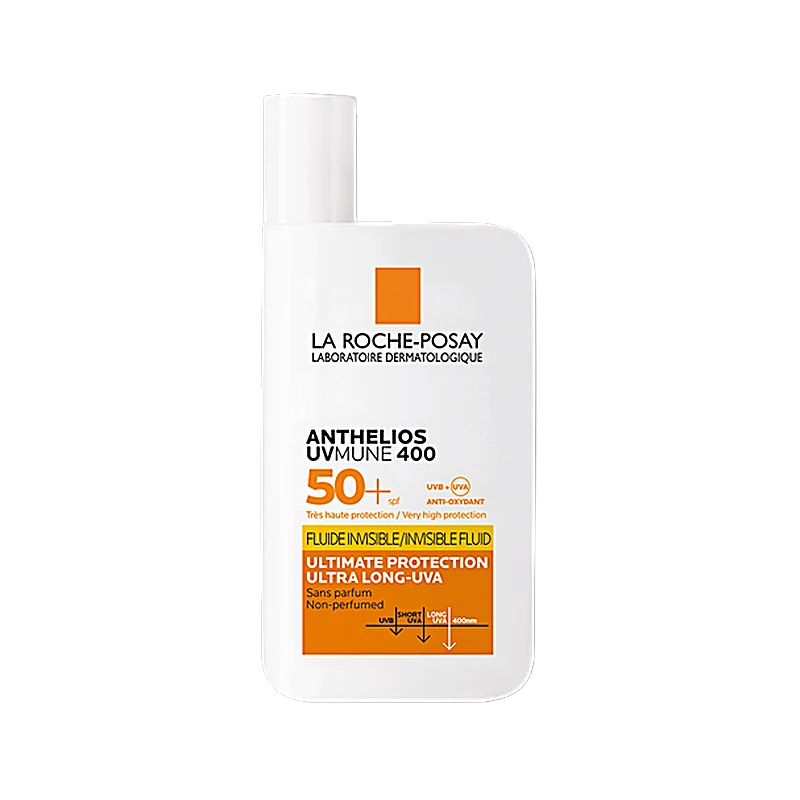
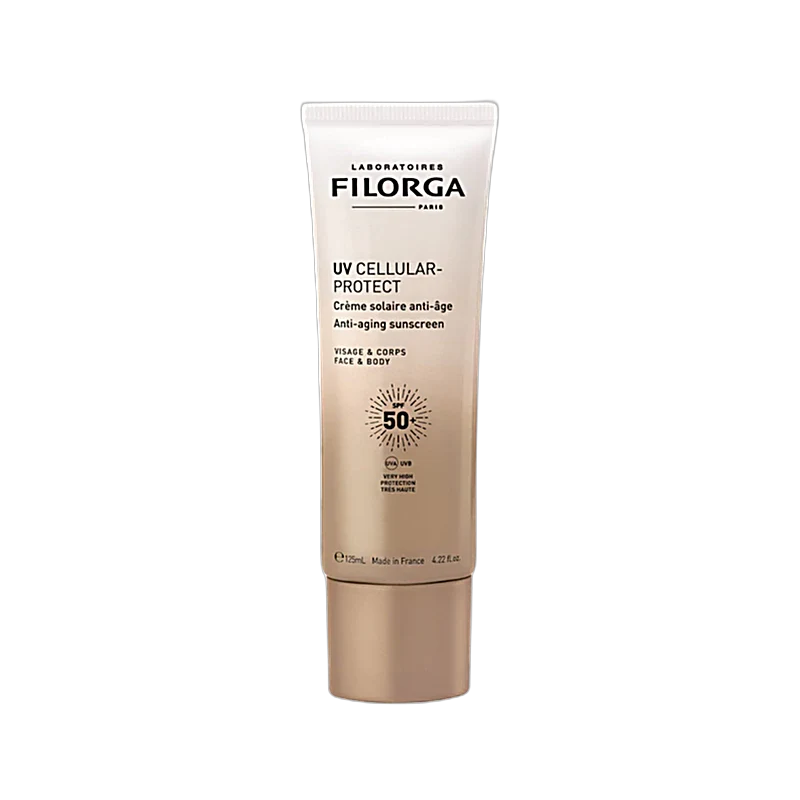
The claims on the label must be cosmetic and provable: reduces the visibility of fine wrinkles with regular use is correct, erases wrinkles is not. And the routine obligatorily includes sun protection and hydration. From the products on the site, as companions rather than substitutes, in the morning I recommend the sunscreens La Roche-Posay Anthelios UVMUNE 400 and Filorga UV-Cellular, in the evening the hydrating Eucerin Hyaluron-Filler for the sandwich method, and for cleansing without breaking the barrier the gentle Eucerin DermatoClean. If you are unsure which concentration and frequency suit your skin, ask me in the chat: I answer personally and free of charge, for information only, without diagnosis and without changing therapy.
The product from this article
Recommended by DidiLa Roche-Posay Anthelios UVMUNE 400 invisible fluid SPF 50+, 50 ml
Didi: An invisible fluid with very high UVA protection (UVA-PF 46) that sits comfortably on the face and under make-up.
Leads to the product page with an affiliate link: if you buy through it, I earn a commission at no extra cost to you.
The product from this article
Recommended by DidiFilorga UV-Cellular Protec sunscreen cream for face and body SPF 50+
Didi: High antioxidant protection for face and body that also guards against photoageing, without a heavy feel.
Leads to the product page with an affiliate link: if you buy through it, I earn a commission at no extra cost to you.
The product from this article
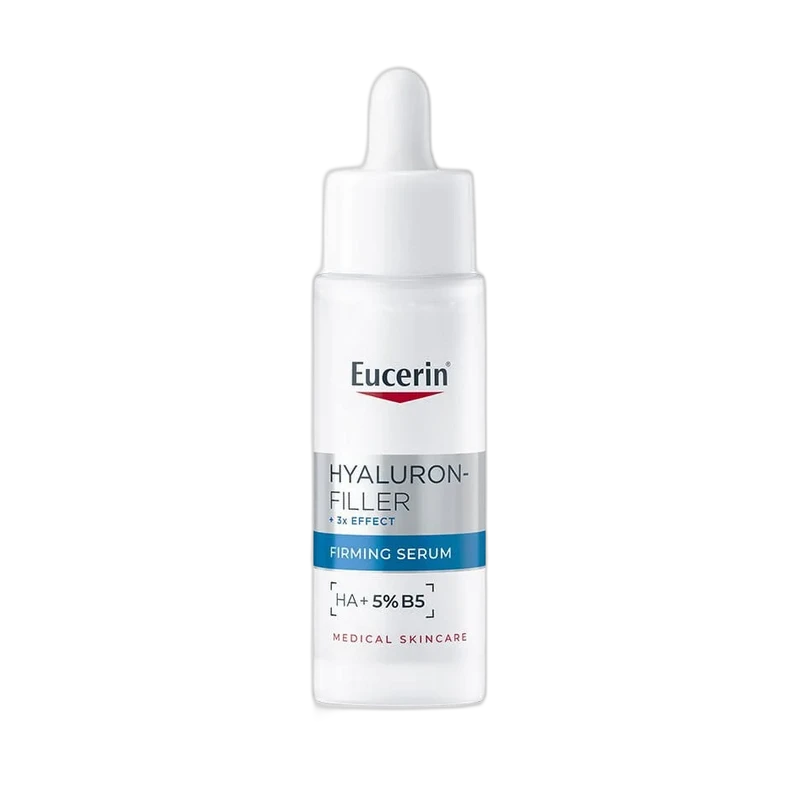
Recommended by DidiEucerin Hyaluron-Filler + 3x Effect plumping anti-wrinkle serum, 30 ml
Didi: A concentrated serum with hyaluronic acid and 5% panthenol that firms and plumps. Pairs well with the day cream from the same line.
Leads to the product page with an affiliate link: if you buy through it, I earn a commission at no extra cost to you.
The product from this article
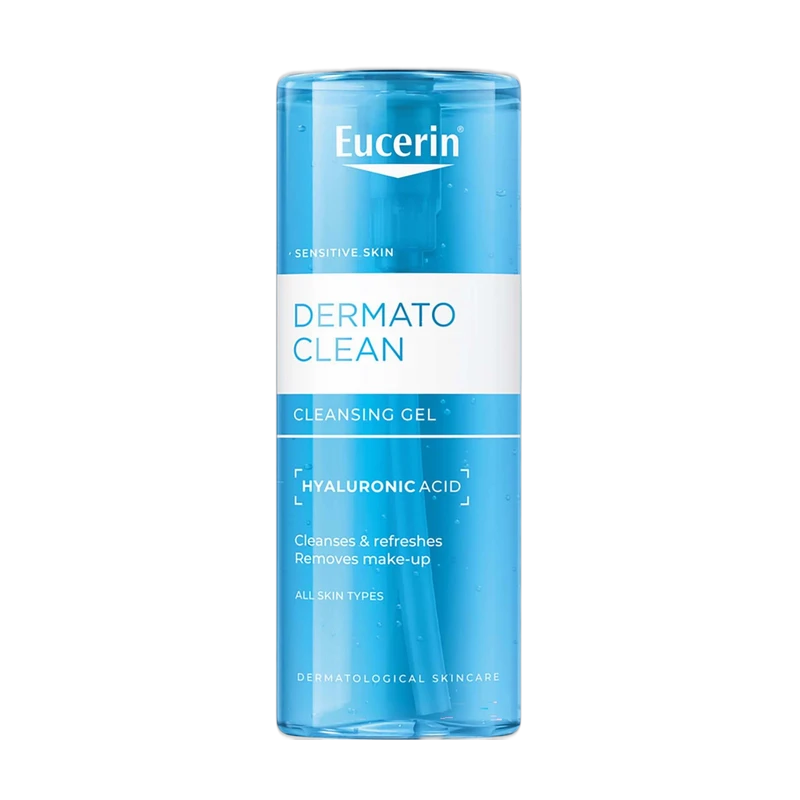
Recommended by DidiEucerin DermatoClean face cleansing gel with hydrating effect, 200 ml
Didi: A gentle gel with hyaluronic acid that removes makeup and impurities without drying. A suitable first step at any age.
Leads to the product page with an affiliate link: if you buy through it, I earn a commission at no extra cost to you.
Sources
This article was written by Donka Arabadzhova, Master of Pharmacy, and confirmed by the following sources: Kang S. et al., Journal of Investigative Dermatology, 1995; Mukherjee S. et al., Clinical Interventions in Aging, 2006; the American Academy of Dermatology (AAD), materials on retinoids and retinol; the Scientific Committee on Consumer Safety (SCCS) opinion SCCS/1639/21 on vitamin A in cosmetics, 2022; Regulation (EU) 2024/996 on the restrictions of vitamin A in cosmetic products.
This article is for informational purposes only and does not replace a consultation with a doctor or pharmacist about your specific condition. The product cards in it lead to pages with affiliate links: if you buy through them, I earn a small commission at no extra cost to you.
I answer personally and free of charge, for information purposes only, without diagnosis and without changes to your therapy.
If this article was useful and you think it will help someone, share it. That is how my work and knowledge reach more people.