
 Seasonal topicsAugust 15, 20265 min read
Sunburn: first aid and proper skin care
Author: Donka Arabadzhova, Master of Pharmacy
This article is for informational purposes only and does not replace a consultation with a doctor or pharmacist about your specific condition.
How I choose topics and verify facts, read in the Editorial policy of mom.pharma.
Finding this article useful? Share it: that is how my work and knowledge reach more people.
What sunburn actually is
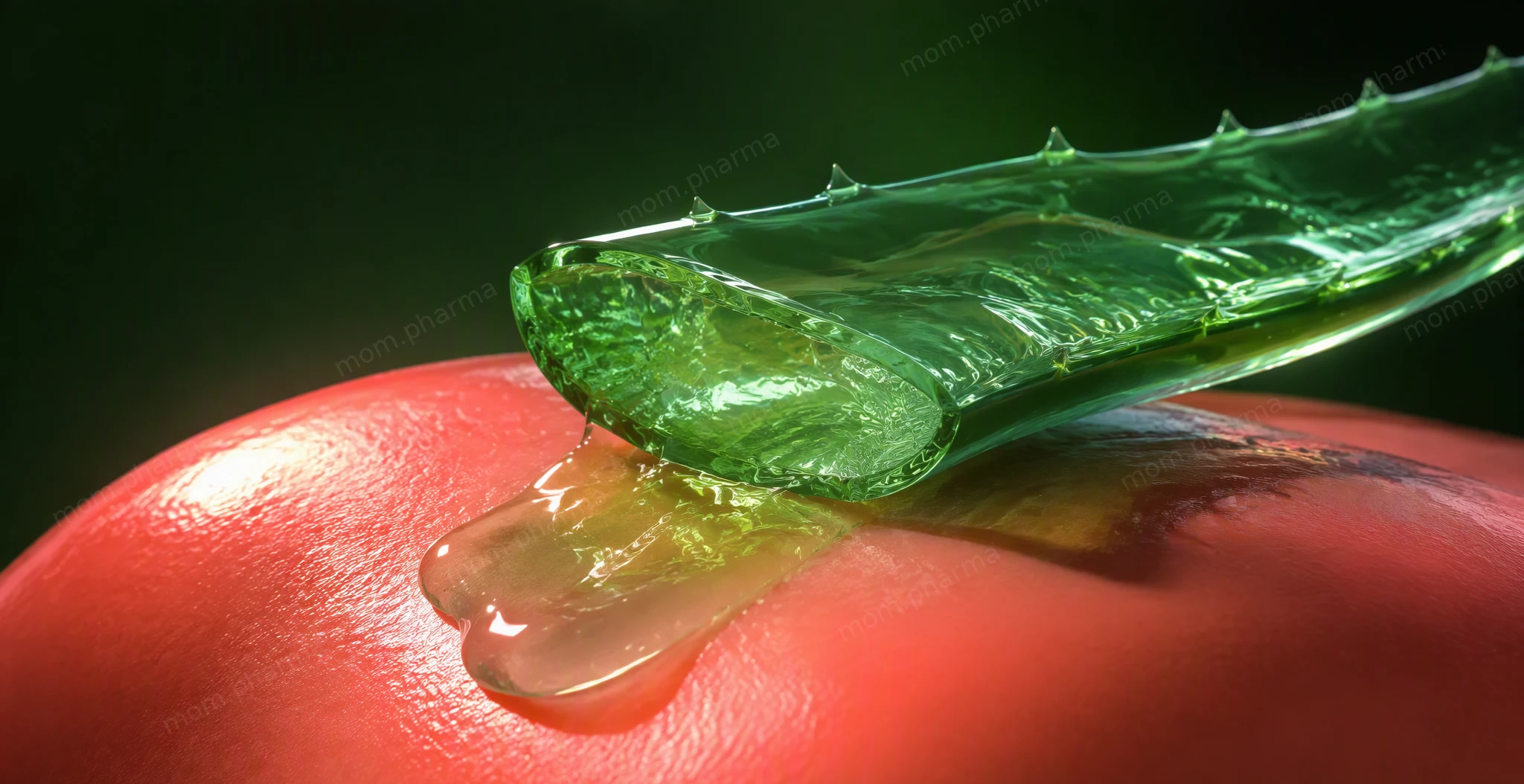
Sunburn is real skin damage from ultraviolet rays, not just redness that will pass. It appears a few hours after exposure, and its full extent only becomes clear up to 24 hours later. That is why skin often looks worse in the evening than it did at noon.
The skin feels hot, is painful, and usually starts peeling after a few days. A mild burn heals on its own in about 7 days. A more severe one, with blisters, is already a second-degree burn and needs more care.
The key point the World Health Organization stresses: every sunburn raises the risk of skin cancer, and repeated burns in childhood are among the strongest risk factors. That is why the right reaction in the first hours and good prevention matter for health, not just comfort.
The first steps right away
Get out of the sun as soon as you feel the skin burning or see it reddening. Every further minute in the sun deepens the burn. Move into the shade or indoors and start cooling as early as possible.
Cool the skin with a cool, not icy, shower or a clean towel dampened with cool water for about 10 minutes several times a day. With a baby or a small child, cool carefully and make sure the whole body does not get cold.
Drink more water over the next days, because a burn draws fluids towards the skin and can lead to dehydration. Alcohol makes dehydration worse, so skip it while the skin heals.
What helps
Apply a fragrance-free moisturiser or an aloe vera gel onto slightly damp skin. A product kept in the fridge soothes even more. Calamine lotion also eases the burning and itching. Reapply whenever you feel discomfort.
For pain, paracetamol or ibuprofen taken according to the leaflet reduce both the pain and the inflammation. Important: aspirin must not be given to children and teenagers under 16.
Wear loose, light clothes that do not rub the skin, and keep the burnt areas out of the sun until fully healed. In practice this means a few days without the beach, however unwelcome that sounds on holiday.
What you must not do
Do not put ice or ice packs directly on the skin, as they can damage it further. Do not apply petroleum jelly, greasy ointments or alcohol-based products on a fresh burn, as they trap the heat and irritate the skin.
Do not use creams and sprays with benzocaine or lidocaine, recognisable by the "-caine" ending in the ingredient list. They can irritate burnt skin and trigger an allergic reaction, and their benefit is short-lived.
Do not peel or scrub the peeling skin, even when it itches. Peeling is the body's normal way of shedding the damaged layer. Keep using the moisturiser and let the skin renew itself.
Blisters mean a more severe burn
Blisters indicate a second-degree burn. Do not pop them: an intact blister is a natural dressing that protects against infection. Cover them with soft clothing and do not rub them.
If a blister breaks on its own, wash gently with water and mild soap, do not tear off the loose skin, and cover with a clean non-stick dressing. Pus, spreading redness, swelling or fever are signs of infection and require a doctor.
Children and sunburn
Children's skin is thinner and burns much faster than adult skin, sometimes within ten minutes in strong sun. Babies under 6 months should not be in direct sunlight at all: shade, light long-sleeved clothing and a hat are their protection.
If a baby or a small child gets sunburnt, see a doctor even if the burn looks mild. In children the risk of dehydration and general reactions is higher, and a specialist's judgement is safer than home observation.
When to seek medical help
See a doctor for extensive blisters or swelling, high temperature or chills, headache, nausea, dizziness and muscle cramps, as these point to heat exhaustion. Also seek help for signs of infection in the blisters or when the condition worsens instead of improving after the second day.
In a severe general condition with confusion, fainting or a very high temperature, call the emergency services immediately (112 in Bulgaria and the EU). Sunburn looks harmless, but combined with heatstroke it can become dangerous, especially for children and older people.
The best treatment is prevention
A broad-spectrum sunscreen of at least SPF 30, applied generously 15 to 30 minutes before going out and renewed every 2 hours and after every swim, is the foundation. Most people apply too little and never reapply, and that is exactly when burns happen.
Shade between 11 am and 4 pm, tightly woven clothing, a wide-brimmed hat and UV-protective sunglasses complete the cream. You will find details on choosing and applying sunscreen in the dedicated sunscreen article, and for a recommendation for your skin type write to me in the "Ask Didi" chat: I answer personally and free of charge, for information purposes only, without diagnosis and without changes to your therapy.
Sources
This article was written by Donka Arabadzhova, Master of Pharmacy, and confirmed by the following sources: the NHS guidance on treating sunburn, the recommendations of the American Academy of Dermatology (AAD) and Mayo Clinic's sunburn first aid, as well as World Health Organization data on ultraviolet radiation and skin cancer risk.
This article is for informational purposes only and does not replace a consultation with a doctor or pharmacist about your specific condition.
I answer personally and free of charge, for information purposes only, without diagnosis and without changes to your therapy.
If this article was useful and you think it will help someone, share it. That is how my work and knowledge reach more people.