
 Herbs and phytotherapyAugust 19, 20262 min read
Turmeric and ginger: the trend versus the evidence
Author: Donka Arabadzhova, Master of Pharmacy
This article is for informational purposes only and does not replace a consultation with a doctor or pharmacist about your specific condition.
How I choose topics and verify facts, read in the Editorial policy of mom.pharma.
Finding this article useful? Share it: that is how my work and knowledge reach more people.

Why turmeric without black pepper barely works

The active compound of turmeric, curcumin, is absorbed extremely poorly: in the classic study by Shoba et al. (Planta Medica, 1998), after a 2-gram dose of curcumin, blood levels were almost unmeasurable. When piperine from black pepper was added to the dose, absorption jumped by 2000%. That is why a supplement without piperine or another absorption formula is the same as throwing your money in the bin, and olive oil in food also helps because curcumin is fat-soluble.
And an important difference: turmeric as a spice contains only 1-6 percent curcumin. To reach the doses from clinical trials you would have to eat dozens of teaspoons a day, which is unrealistic. So the spice is a healthy habit, but the positive effects are felt when taking extracts.
What is proven and what is not
The strongest data for curcumin are in osteoarthritis: a 2024 meta-analysis of 23 studies with 2175 patients found a significant reduction in pain, and in two trials the effect was comparable to that when taking ibuprofen. These, however, are study data, not an approved health claim for supplements in the EU. With osteoarthritis the decision is made after an examination by a doctor. For ginger the best studied action is against nausea, and obstetric societies allow it as a non-medicinal option for morning sickness in pregnancy. Here too these are study data, not an approved health claim, so in pregnancy every supplement is agreed with a doctor.
Not proven: detox, miraculous weight loss, a cure for everything. Be careful: curcumin has an antiplatelet effect and amplifies anticoagulants such as warfarin, aspirin and clopidogrel. In gallstones it can provoke colic, and rare cases of liver injury from high-dose extract with piperine have been described. Culinary amounts are safe, but concentrated capsules require consultation with a doctor, especially if taken daily over a long period.
Practical rules from the pharmacy
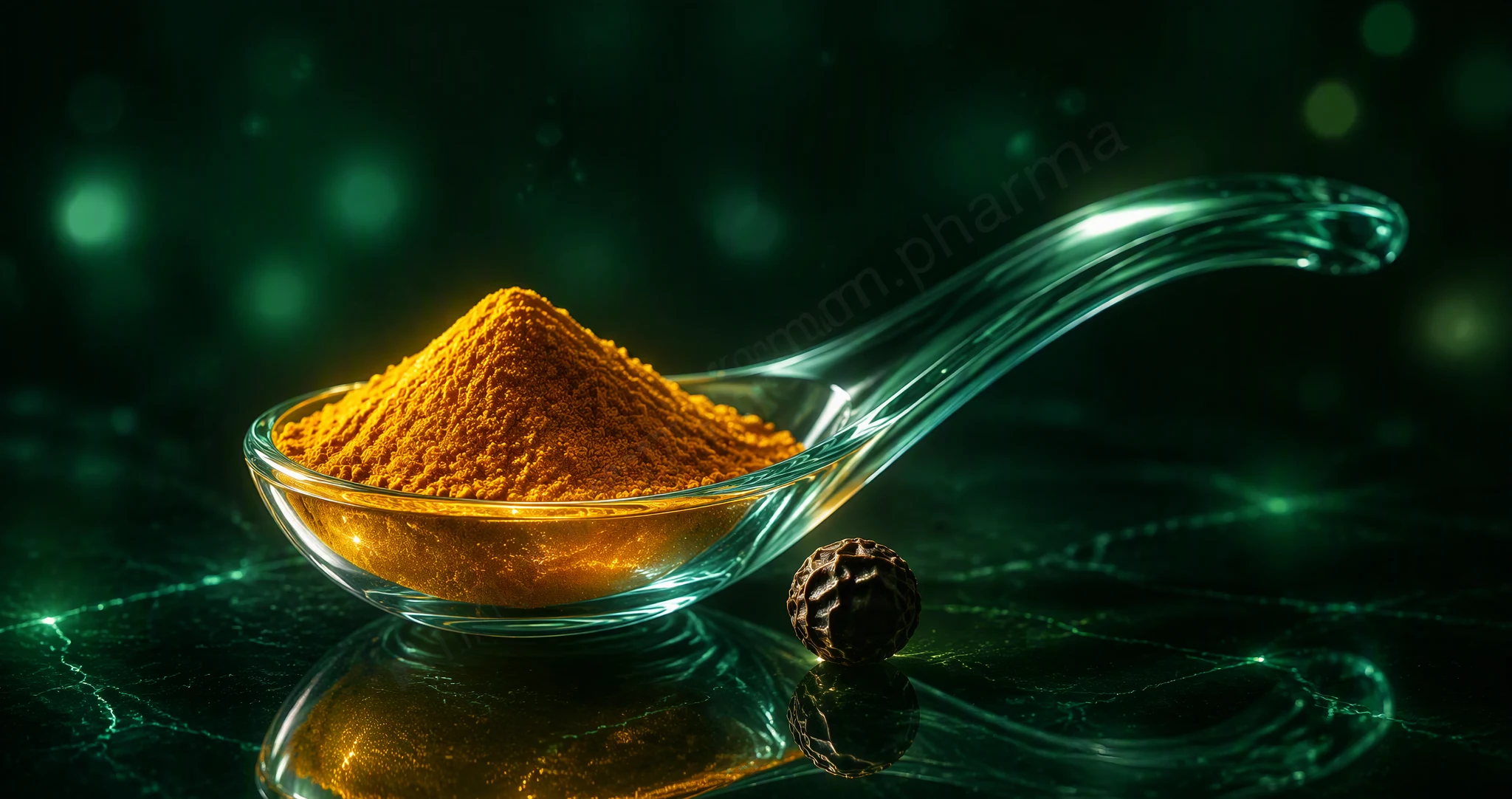
If you use turmeric in the kitchen: always with fat and a pinch of black pepper. If you choose a supplement: look for how much curcumin the capsule contains, not just how much turmeric, and for an absorption formula. Typical doses in studies are 500-1000 mg of curcumin daily.
Before surgery stop curcumin supplements at least two weeks ahead, and if you take blood-thinning medication, tell your doctor before you start.
Sources
This article was written by Donka Arabadzhova, Master of Pharmacy, and confirmed by the following sources: the study by Shoba et al. on the influence of piperine on curcumin bioavailability (Planta Medica, 1998), the 2024 meta-analysis on curcumin in osteoarthritis and the Practical Gastroenterology review on the use, risks and interactions of curcumin (2024).
This article is for informational purposes only and does not replace a consultation with a doctor or pharmacist about your specific condition.
I answer personally and free of charge, for information purposes only, without diagnosis and without changes to your therapy.
If this article was useful and you think it will help someone, share it. That is how my work and knowledge reach more people.