
 Mother and childAugust 14, 2026· Updated on September 19, 20264 min read
Vitamin D for your baby: when, how much and in what form
Author: Donka Arabadzhova, Master of Pharmacy
This article is for informational purposes only and does not replace a consultation with a doctor or pharmacist about your specific condition.
The product cards in it lead to pages with affiliate links: if you buy through them, I earn a small commission at no extra cost to you.
How I choose topics and verify facts, read in the Editorial policy of mom.pharma.
Finding this article useful? Share it: that is how my work and knowledge reach more people.

Why vitamin D matters for babies
Vitamin D contributes to the normal function of the immune system and to the maintenance of normal bones and teeth. In babies it is especially important because the skeleton grows at an enormous pace during the first year.
A small baby gets vitamin D mainly from two sources: sunlight on the skin and food. In autumn and winter, as well as in breastfed babies, these sources are often not enough, which is why paediatricians in Bulgaria recommend a supplement.
When to start and how much

The general recommendation is to start in the first days after birth, once the paediatrician has examined the baby. The usual dose for babies is 400 international units daily, but the exact dose and duration are determined by your paediatrician for the specific case.
It is important not to combine two vitamin D supplements at the same time, because the doses add up. If the baby is on formula, tell the paediatrician: most formulas already contain vitamin D and the dosage is recalculated.
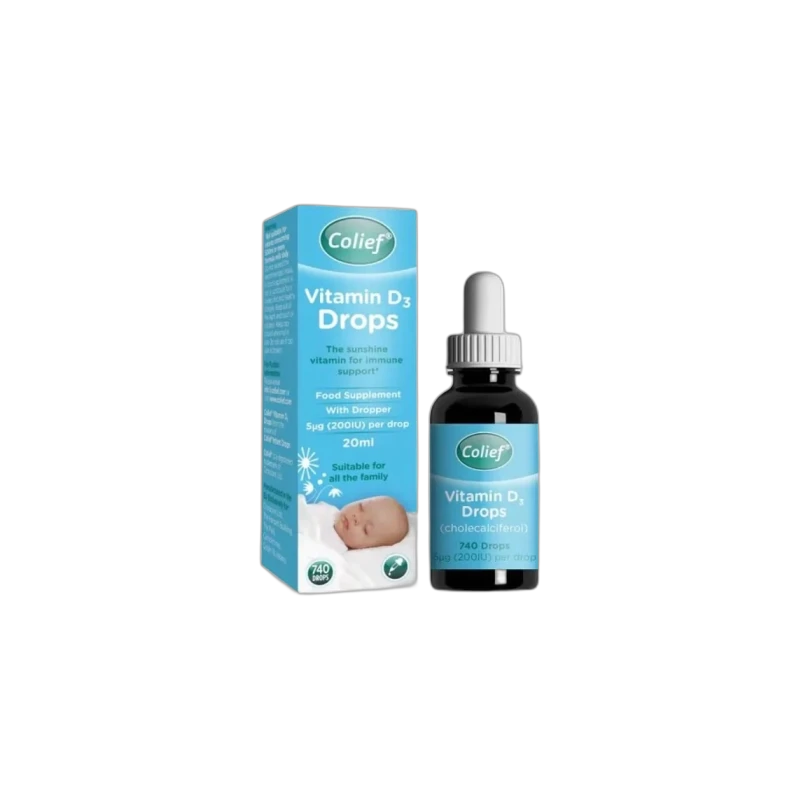
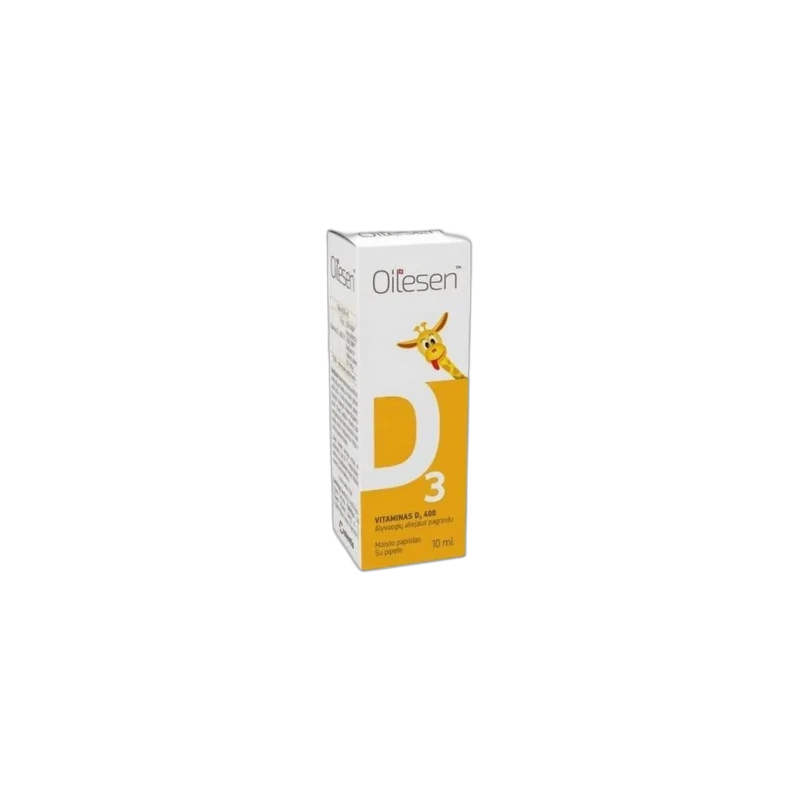
Overdosing is not harmless: vitamin D accumulates in the body and a lasting excess can raise blood calcium (hypercalcemia), which shows as vomiting, loss of appetite, strong thirst and sleepiness. That is why the dose is never increased just in case and the instructions of the paediatrician are followed exactly. For reference from the leaflets: the allowed dose of Colief Vitamin D3 is 2 drops (400 IU) daily, and of Oilesen Vitamin D3 is 1 drop (400 IU) daily, unless the doctor has prescribed otherwise.
The product from this article
Recommended by DidiColief Vitamin D3 drops 400 IU, 20 ml
Didi: Food supplement with a dropper: 2 drops daily provide 400 IU, and the bottle lasts about a year. No added sugar, colourants or preservatives.
The product from this article
Oilesen Vitamin D3 400 IU drops, 10 ml
Didi: Oil-based food supplement with extra virgin olive oil: 1 drop daily provides 400 IU, easily dosed with the pipette.
Until when should you give vitamin D to your baby?

When is it time to stop vitamin D in children? "Do we still need to give vitamin D?" is one of the most common questions that parents of already grown babies ask. Their logic is understandable: the child already walks steadily and eats a varied diet. The short answer is: the intake continues until food and sunlight start to fully cover the needs of the body.
In practice paediatricians recommend that the daily intake continues at least through the first two to three years of the child's life. After this age, adding vitamin D is strongly advisable during the autumn and winter months. The reason is geographical: in Bulgaria sunshine from October to April is too weak and is not enough for the natural synthesis of the vitamin in the skin.
How is the exact dose determined? The exact moment to stop the intake is judged individually by the treating paediatrician. Three main factors are taken into account: the way of feeding, the current season and the specific development of the particular child.
An important rule when feeding changes: if the child starts taking another supplement that already contains vitamin D, the daily dose is recalculated without fail. This is done to avoid unwanted doubling and accumulation of excessive amounts.
Official reference values. The European Food Safety Authority (EFSA) sets the following indicative daily intake levels: 400 international units (IU) daily for infants and 600 international units (IU) daily for children and adolescents from 1 to 17 years. It is against these baseline references and the individual needs of the child that the paediatrician adjusts and manages the dose.
Which form is most practical

For babies the most convenient form is drops: easy to dose, tasteless and taken without a problem directly into the mouth or on a spoon. Look for a product made specifically for babies, with a clearly marked dose per drop.
Store the bottle according to the leaflet, usually away from light and heat, and watch the after-opening period, which is often shorter than the overall shelf life.
When to consult a specialist

For premature babies, if you suspect an overdose or if you forget doses often, talk to your paediatrician. If you are not sure how to read the label of a specific product, ask me in the chat: I answer personally and free of charge, for information purposes only, without diagnosis and without changes to your therapy.
Sources
This article was written by Donka Arabadzhova, Master of Pharmacy, and confirmed by the following sources: National Institutes of Health (NIH, Office of Dietary Supplements): "Vitamin D - Fact Sheet for Health Professionals". EFSA Journal: "Dietary reference values for vitamin D", 2016.
The product from this article
Colief Vitamin D3 drops 400 IU, 20 ml
Recommended by DidiDidi: Food supplement with a dropper: 2 drops daily provide 400 IU, and the bottle lasts about a year. No added sugar, colourants or preservatives.
The product from this article
Oilesen Vitamin D3 400 IU drops, 10 ml
Didi: Oil-based food supplement with extra virgin olive oil: 1 drop daily provides 400 IU, easily dosed with the pipette.
This article is for informational purposes only and does not replace a consultation with a doctor or pharmacist about your specific condition. The product cards in it lead to pages with affiliate links: if you buy through them, I earn a small commission at no extra cost to you.
I answer personally and free of charge, for information purposes only, without diagnosis and without changes to your therapy.
If this article was useful and you think it will help someone, share it. That is how my work and knowledge reach more people.