 Supplements and vitaminsAugust 22, 20269 min read
Vitamin C: how much is enough, which form makes sense and what is proven for immunity
Author: Donka Arabadzhova, Master of Pharmacy
This article is for informational purposes only and does not replace a consultation with a doctor or pharmacist about your specific condition.
How I choose topics and verify facts, read in the Editorial policy of mom.pharma.
Finding this article useful? Share it: that is how my work and knowledge reach more people.
The conversation that repeats again and again at the pharmacy
With the first sneeze in the neighbourhood, the same conversation starts in the pharmacy: "Give me a vitamin C 1000, I think I caught something." And every time I say the same thing in answer to the customer's question: have you been taking it daily, or are you buying it now because the sneezing has started? People smile, but this question decides everything. Between regular intake and the "emergency" tablet lies a difference that studies have measured down to the percent and practice confirms.
This article has gathered everything I explain several times a day every autumn: how much vitamin C is enough, which forms are worth the money and which are marketing, what exactly Cochrane has found about colds, and when a large dose turns from useful into problematic.
How many milligrams are enough

Every supplement label carries the reference value NRV: 80 mg per day under Regulation (EU) No 1169/2011. That is a labelling unit, not an intake recommendation. The actual EFSA recommendations are higher: 110 mg daily for men and 95 mg for women (EFSA Journal, 2013). Pregnancy adds 10 mg, breastfeeding a full 75 mg, and smokers need about 35 mg more every day, because each cigarette burns through part of the reserve (NIH ODS). At the other pole sits scurvy: it appears at intakes below roughly 10 mg a day sustained for a month or more.
Food covers the intake the body needs without a problem. Five portions of fruit and vegetables a day provide over 200 mg, and half a raw pepper on its own delivers 95 mg. The record holders are acerola (a tropical red fruit resembling a cherry. You will not find it as fresh fruit in the shops, but you will find it as powder, tablets and juices in pharmacies.) with 1,677 mg per 100 g and rosehip with 426 mg per 100 g according to USDA data. One detail is often missed though: vitamin C dislikes heat. Cooking retention ranges from 0 to 91.1% depending on the method, with the microwave preserving it best and boiling losing the most (PMC6049644). Rosehip tea boiled for a long time on the stove no longer delivers the same dose of the vitamin as raw rosehip. Short processing and raw sources preserve the vitamin.
The forms: expensive is not always better and stronger
The second most frequent question at the counter is which form is "the best": plain ascorbic acid, sodium or calcium ascorbate, Ester-C. The answer surprises people. Randomised studies find no difference in plasma concentrations between Ester-C and simple ascorbic acid, nor between any other pair of forms. The conclusion quoted by NIH ODS: plain ascorbic acid is the preferred source. And Regulation (EU) No 432/2012 contains no approved claim for "better absorption" of any form.
What does matter then? Tolerance. Ascorbic acid on an empty stomach can irritate the stomach, while buffered forms are gentler without being absorbed any better. There is also an absorption ceiling that advertisements conveniently skip: at 30 to 180 mg a day the body takes in between 70 and 90% of the dose, and above 1 g the figure drops below 50. Beyond 200 to 400 mg per intake, plasma levels almost stop rising. The rest is excreted by the body.
What the label is allowed to say and what not

For immunity, the EU has exactly one approved claim: vitamin C contributes to the normal function of the immune system (Regulation (EU) No 432/2012). The condition is that the product contains at least 12 mg per daily dose, that is 15% of the reference value. A special claim also exists for athletes: maintaining the normal function of the immune system during and after intense physical exercise, at 200 mg daily in addition to the recommended intake. It was written for athletes and people with heavy training regimens, not for every occasion.
More useful, however, is knowing what does not exist. There is no approved claim that vitamin C stops the flu, cures COVID or protects against allergies. A label promising you anything of the sort has stepped outside the law.
Colds: the three clear answers from Cochrane

First, one explanation, because the name will appear in other articles too: Cochrane is an international independent organisation that collects and analyses medical research. All reliable studies on a given health problem are gathered in one place to see whether a treatment really works. It works without commercial interests and outside pressure, so its conclusions outweigh any single advertisement or isolated trial. Their systematic review on vitamin C (Hemilä and Chalker) summarises dozens of randomised trials and gives three clear answers. First: regular intake of at least 0.2 g daily does not reduce the number of colds in the general population.
The second answer is more encouraging: with regular intake a cold ends sooner, by about 8% in adults and 14% in children, and in children who take 1 to 2 g daily the shortening reaches 18%, with a milder course. Eight percent of a seven-day cold is half a day, not a miracle, but a measurable one.
The third answer concerns the "at the first sneeze" scenario: started after symptoms appear, intake has no consistent effect (7 comparisons, 3,249 episodes). Cochrane's conclusion is that routine supplementation for prevention in the whole population is not justified. And if you would like to learn more about children's immunity, you can read about it in this article of mine.
Iron, collagen and fatigue

Two approved claims link vitamin C to iron and to skin. The first: vitamin C increases iron absorption (Regulation (EU) No 432/2012; Zijp and colleagues, 2000). Measure is mandatory though: with haemochromatosis or a risk of iron overload, high doses of vitamin C make things worse (NIH ODS). The rule from practice is blood count and ferritin first, any supplement only after.
The second claim states: vitamin C contributes to normal collagen formation for the normal function of the skin. Read it again: "normal function of the skin", not "reduces wrinkles". The latter claim does not exist in the register. What genuinely helps the skin at different ages I cover in the article on anti-aging care.
Megadoses: how much is too much

Here I need to correct a widespread error: the EU has no official upper limit for vitamin C. EFSA failed to set one in 2004 because of insufficient data (EFSA-Q-2003-018), and the new review series from 2024-2025 does not include it. The absence of a limit, however, does not mean overdosing is impossible. Other regulators give concrete reference values: 2,000 mg daily in the United States (IOM/FNB) and 1,000 mg of supplemental intake in the United Kingdom (EGVM, 2003).
What happens above a gram? Gastrointestinal complaints start climbing, and at 3 to 4 g daily they are nearly guaranteed: diarrhoea, bloating, cramps (EFSA, 2004). And since absorption above 1 g is already saturated, the megadose is mostly expensive urine.
The kidney question is more serious. A prospective study of 23,355 men followed for 11 years recorded 436 first kidney stones. Those taking vitamin C supplements had a rate of 310 versus 163 per 100,000 among the rest, and at more than seven 1,000 mg tablets a week the risk grew 2.23-fold (Thomas and colleagues, JAMA Internal Medicine, 2013). No such link was found in women, but the male data should not be shrugged off.
The five myths that return every autumn

"A megadose stops the flu and the cold." No. Intake at the first sneeze has no proven effect, and regular intake only slightly shortens the illness, as we saw above (Cochrane).
"It is water-soluble, you cannot overdose it." Water-soluble it is, but above 1 g a day gastrointestinal disturbances begin, high doses raise the risk of kidney stones in men (Thomas, 2013), and haemochromatosis carries a separate risk (NIH ODS).
"Vitamin C cures COVID." No. The LOVIT-COVID and REMAP-CAP trials in 1,568 critically ill patients showed no benefit and even recorded a signal of harm (JAMA, 2023).
"1000 mg daily is the best immune insurance." Absorption saturates above 1 g (EFSA, 2004) and cold frequency does not change (Cochrane). You are paying for a tablet the body throws away.
"Acerola, rosehip and Ester-C are the better vitamin C." Ascorbic acid is bioequivalent to the natural vitamin and no proven difference exists between the forms (NIH ODS). Rosehip and acerola are wonderful foods, but nowhere is there an approved claim that they are a "better supplement".
When the tablet is not the answer
There are situations in which high doses require a visit to the doctor before you come to the pharmacy. Kidney stones in your history, or regular intake above 1 g in men: a consultation with a doctor before any high dose is mandatory (Thomas, 2013). Haemochromatosis or a risk of iron overload: the check is done with tests: a blood count and ferritin. Chemotherapy or radiotherapy: high doses only after talking to your oncologist, because antioxidants can interfere with treatment (NIH ODS).
There are also signals that vitamin C does not solve. Gastrointestinal complaints at doses above 1 g mean the dose is reduced or stopped (EFSA, 2004). Bleeding gums, bruising without a reason, slowly healing wounds and heavy fatigue in smokers, people on restrictive diets or the elderly are a reason to see a doctor, because scurvy may be involved (NIH ODS). And with diabetes plus high doses, urine test strips read falsely low, so tell your doctor what you are taking (PMID 3955816).
Why the site has no vitamin C supplement for adults
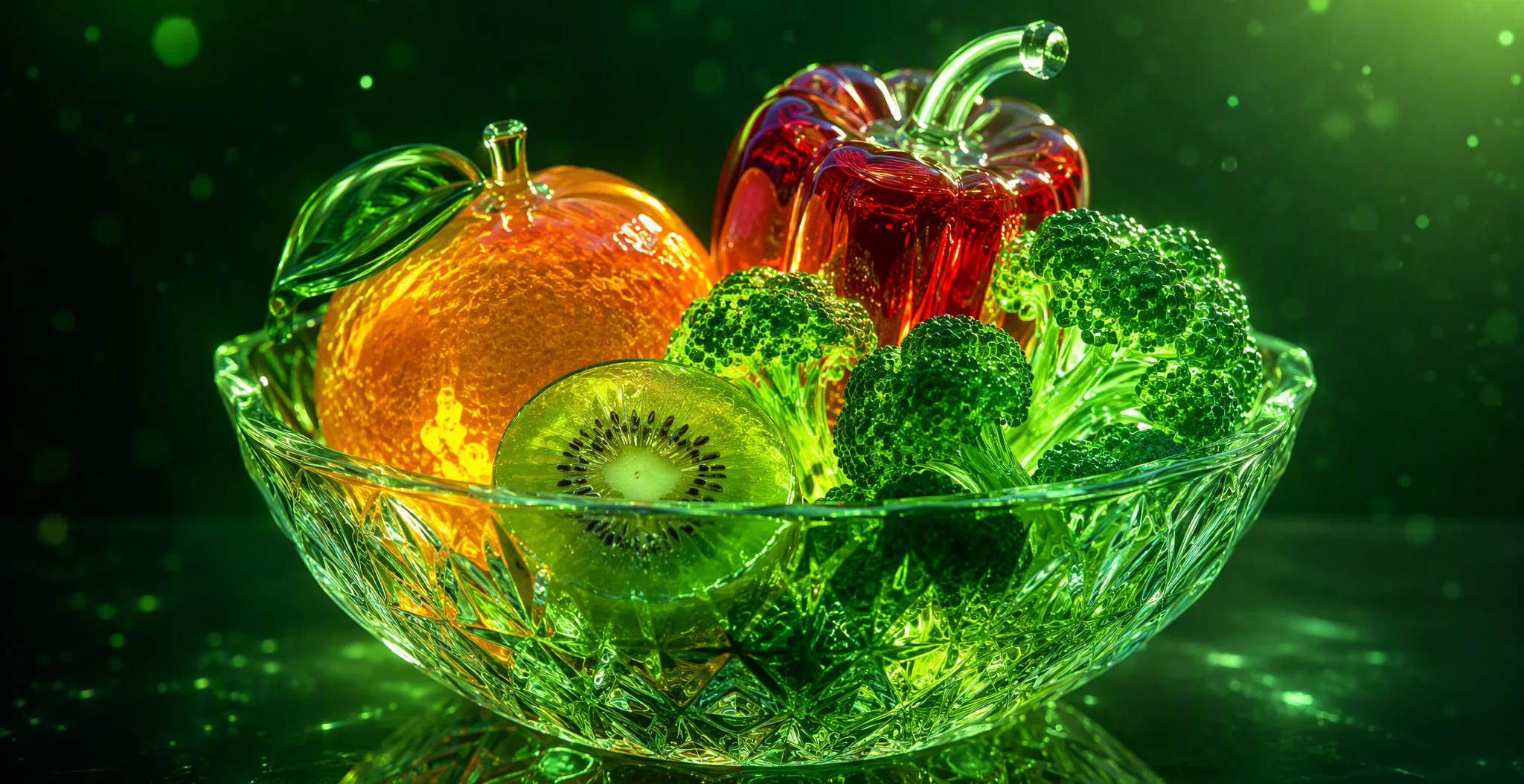
Honestly and deliberately: at the moment I have not recommended and added a vitamin C supplement for adults to the site. Not because good products do not exist, but because the vitamin is easily obtained from food: peppers, kiwi, citrus, broccoli. A supplement makes sense with a proven deficiency, with high needs such as in smokers and athletes, or on a doctor's recommendation, not "just in case".
If you already have a specific product at home and want us to read its label together, ask me in the chat: I answer personally and free of charge, for information purposes only, without diagnosis and without changes to your therapy.
Sources
This article was written by Donka Arabadzhova, Master of Pharmacy, and confirmed by the following sources: Regulation (EU) No 432/2012, consolidated text (approved health claims for vitamin C); Regulation (EU) No 1169/2011, Annex XIII (reference value NRV 80 mg); the EFSA opinion on upper limits (EFSA-Q-2003-018, 2004); EFSA dietary reference values (EFSA Journal, 2013;11(11):3418); the Cochrane systematic review on vitamin C and colds (Hemilä H., Chalker E., CD000980); the LOVIT-COVID and REMAP-CAP trials (JAMA, 2023; PMID 37877585); Thomas et al., JAMA Internal Medicine, 2013 (PMID 23381591) on vitamin C and kidney stones; the NIH Office of Dietary Supplements vitamin C fact sheet and the NIH COVID-19 Treatment Guidelines; Zijp et al., Critical Reviews in Food Science and Nutrition, 2000 (PMID 10999016); PMC6049644 on cooking losses; PMID 3955816 on glucose test strips; and the USDA food table for vitamin C (rosehip, acerola).
This article is for informational purposes only and does not replace a consultation with a doctor or pharmacist about your specific condition.
I answer personally and free of charge, for information purposes only, without diagnosis and without changes to your therapy.
If this article was useful and you think it will help someone, share it. That is how my work and knowledge reach more people.